
Reviews
3 Hidden Ways Your Work Trucks Are Losing Your Money (and How to Fix Them)

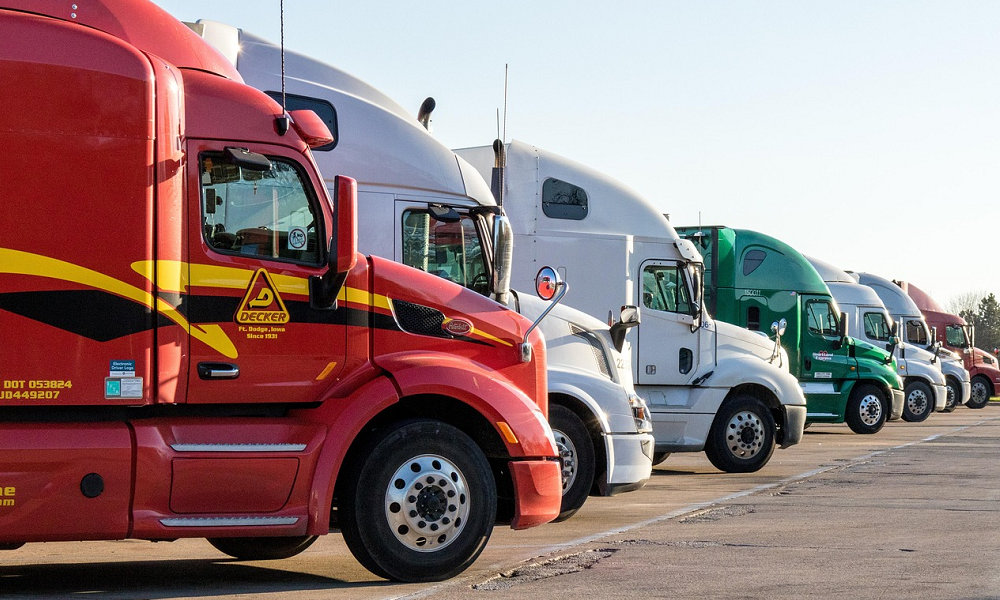
In the contracting world, a truck is more than just a vehicle; it is a mobile office, a tool chest, and a heavy-lift transport. However, most owners focus only on the monthly payment and the gas bill, overlooking the subtle “leaks” that drain thousands of dollars every year.
If you aren’t auditing your fleet’s efficiency, you are likely falling victim to 3 hidden ways your work trucks are costing you money. Plugging these holes requires a shift from reactive repairs to proactive equipment optimization.
Fleet Efficiency Audit
| Problem Area | How You Lose Money | The 2026 Fix |
| Rolling Resistance | Heavy, damaged, or poor-spec rims | High-efficiency 16-inch rims, set of 4 at DWW for sale |
| Aerodynamic Drag | Open beds creating “air buckets” | Aerodynamic caps from TruckBedSupplies |
| Operational Gaps | Mismatched machine attachments | Precision tools from SkidSteerStore |
| Idle Time | Searching for disorganized tools | Integrated bed storage and labeling |
1. The Weight and Resistance Trap
One of the most frequent hidden ways your work trucks drain your bank account is through “unsprung weight” and rolling resistance. When your wheels are too heavy for the application or are slightly out of alignment due to age, your engine has to work significantly harder just to maintain highway speeds.
For many fleet owners, moving away from factory-based models to high-quality, lightweight replacements is a game-changer for fuel economy.
Upgrading to a durable, weight-optimized 16-inch rim set of 4 at DWW for sale can reduce strain on your drivetrain and improve miles per gallon (MPG). Across a fleet of five trucks, even a $2 MPG improvement can save tens of thousands of dollars in fuel costs annually.
- Rolling Efficiency Matters
It isn’t just about the fuel; it’s about the wear and tear. High-quality rims dissipate heat better, which extends the life of your brake pads and rotors. When your work trucks operate with less resistance, you spend less time in the shop and more time on the job site.
2. The “Air Bucket” Effect and Cargo Exposure
If you are driving a truck with an open bed at $65$ MPH, you are essentially pulling an invisible parachute. The air travels over the cab and drops into the bed, where it hits the tailgate, creating massive aerodynamic drag. This is one of the classic hidden ways your work trucks consume more fuel than necessary.
Beyond aerodynamics, an open bed is a financial liability for your tools. Rain, snow, and UV rays degrade your power tools, while the lack of security makes them easy targets for theft.
3. Mismatched Attachments and “Dead Time.”
A truck is often judged by the equipment it carries. One of the primary reasons a work truck is losing your money is that it is carrying the wrong tools for the task. If your crew is spending four hours on a job that could take one hour with the right machine attachment, you are losing billable time and paying for unnecessary labor.
This is especially true for contractors utilizing loaders and skid steers. Using a “general purpose” bucket for specialized grading or brush clearing is a waste of your machine’s potential.
For example, outfitting your rig with a high-performance skid steer stump grinder for your machines lets a single operator finish a job in minutes that would otherwise take hours of manual digging or expensive subcontracting. When you eliminate these operational gaps, you stop “losing” money to slow labor and start keeping it as profit.
Comparison: Low-Efficiency vs Optimized Fleet
| Metric | The “Standard” Setup | The Optimized Setup |
| Fuel Economy | Poor (due to drag/weight) | Improved (aerodynamic & light) |
| Tool Longevity | Low (exposed to elements) | High (protected by caps) |
| Labor Speed | Manual/General Tools | High-speed specialized attachments |
| Maintenance | Frequent (heavy wear) | Predictive (optimized components) |
Why “Wait and See” Is a Losing Strategy
Many owners ignore these hidden ways their work trucks leak cash because the individual costs seem small. A $10\%$ drop in fuel efficiency or an extra $30$ minutes of loading time doesn’t feel like a crisis today. However, these costs compound over the life of the vehicle.
By 2026, the cost of labor and fuel has risen to the point where “good enough” is no longer profitable. The most successful businesses are those that treat their work trucks as precision instruments. This means auditing every point of contact, from the road surface to the internal mechanical components.
Utilizing a reliable source for 4wd spare parts online allows you to perform preventative maintenance on differentials, suspension, and transfer cases before a minor squeak turns into a catastrophic failure.
How to Fix Your Fleet’s Finances
Plugging these holes doesn’t require a total fleet replacement. It requires strategic upgrades that pay for themselves through increased efficiency.
- Optimise the Foundation: Check your wheel and tire setup. If your rims are dented or unnecessarily heavy, look into a new set of 16-inch rims, 4 at DWW for sale, to improve balance and fuel draw.
- Close the bed: Stop dragging air and inviting theft. A high-quality cap or tonneau cover from TruckBedSupplies is a one-time purchase that saves thousands in gas and protects tools.
- Audit Your Attachments: Review your most common job-site tasks. Could an attachment from the SkidSteerStore cut your labour time in half? Usually, the answer is yes.
Conclusion (Turning Your Fleet Into a Profit Centre)
Identifying the hidden ways your work trucks are losing your money is the first step toward a more profitable year. By focusing on aerodynamics, weight reduction, and machinery efficiency, you move from being a “truck owner” to a fleet manager.
In 2026, the technology to run a lean, high-output operation is more accessible than ever. Don’t let your profits leak out through open beds and heavy wheels—build a rig that works as hard as you do.
Frequently Asked Questions
1. Do 16-inch rims really affect fuel economy?
Yes. The “rotational mass” of your wheels is significant. Lighter, well-balanced rims require less engine torque to get moving and maintain speed, which directly impacts your MPG, especially in stop-and-go traffic.
2. How much fuel can a truck cap save?
Studies vary, but aerodynamic caps can improve fuel efficiency by $5\%$ to $10\%$ at highway speeds by reducing the “tailgate drag” caused by open beds. Over a year of driving, this often covers the cost of the cap itself.
3. Are skid steer attachments worth the investment for a small team?
Absolutely. For a small team, labor is the most expensive line item. An attachment that allows one person to do the work of three can be the difference between winning a bid and losing money on a project.


Journalist shot dead in Mexico after blaming state government for death threats

Mexican mayor shot dead inside city hall

10 members of same family, including 5 children, killed in house fire in Peru

Houthis claim missile and drone attacks on 2 Saudi oil tankers in Red Sea
-

 Politics1 week ago
U.S. sanctions 10 Cuban entities over repression and regime funding
-

 Legal1 week ago
Muslim mall worker critically injured in stabbing over his religion
-

 Legal2 days ago
Sinaloa Cartel leader ‘El Mayo’ sentenced to life in U.S. prison
-

 Legal1 week ago
Austin police release footage of fatal shooting of man who pointed gun at bystanders
-

 Legal1 week ago
New Mexico detective convicted of helping drug trafficker evade DEA operations
-

 Legal6 days ago
Marine veteran charged with threatening to kill Trump in ‘holy war’
-

 Legal1 week ago
New York man arrested after livestreaming threats to kill Donald Trump Jr.
-

 World1 day ago
Death toll from Guyana ferry disaster rises to 53