
Reviews
5 Ways AI Is Reshaping Global Power Dynamics

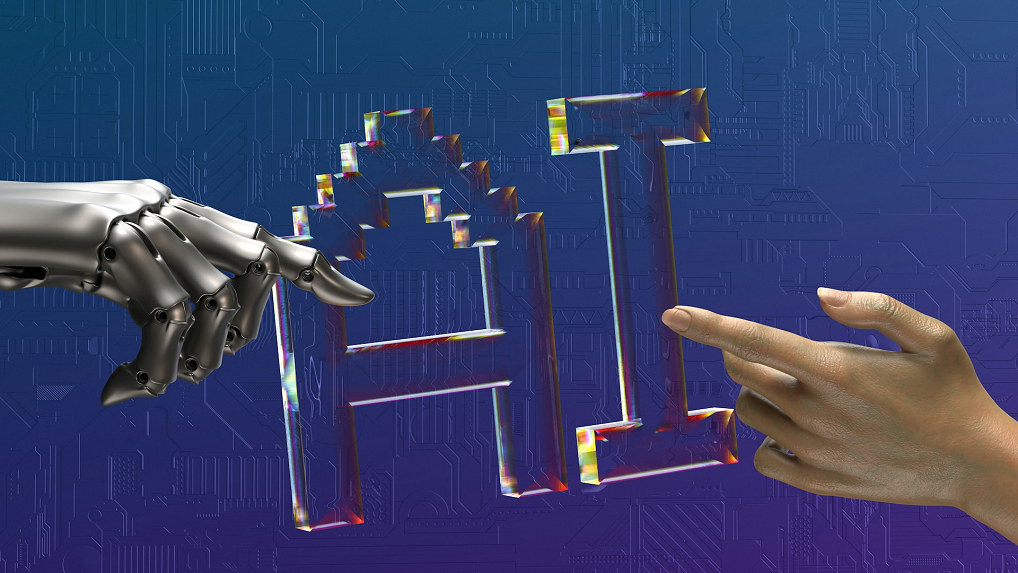
Artificial intelligence (AI) is a technology that is rapidly gaining momentum and significantly changing many areas of human activity.
It’s actively used in different spheres, including medicine, business, and politics. However, it should be noted that AI isn’t only a tool. It’s also transforming the world order. And, no, that’s not clickbait or hyperbole. The reality is that AI is becoming a critical factor in global power relations, significantly shaping economics, geopolitics, and security. It’s also why many companies are seeking solutions with AI capabilities baked in.
Consider these five ways AI is changing global power dynamics.
1. An Increasing AI Divide Between Leaders and Followers
The first change brought about by AI is the widening gap between leaders and followers in the development of this technology. According to Microsoft’s AI diffusion report, in 2025, 16.3% of the global population will use generative AI solutions. However, the spread of AI is uneven. While in the Global North, 24.7% of working-age citizens use this technology, the tally in the Global South amounts to only 14.1%.
Such a gap between nations is called an “AI divide.” Countries with a powerful digital infrastructure, advanced education systems, and significant investments in AI, such as the United Arab Emirates and Singapore, are rapidly catching up.
At the same time, other nations are increasingly being left behind, and this trend may affect the global distribution of influence in a manner similar to industrialization.
2. Competition of Global Superpowers in the AI Field
Another important factor is the rivalry of global superpowers in the sphere of AI. There has been a rapid transition from the dominance of one center of power to a two-pole system of AI development. China, which has become the largest participant in scientific research on artificial intelligence, has gained an advantage in this field.
For example, China’s share of AI-related scientific papers increased from under 5% in 2000 to 36% in 2025. In contrast, the U.S., despite being the leader in AI infrastructure and advanced model development, has not yet reached China’s level in scientific research.
Thus, the rivalry between the two global superpowers in the development of AI will continue, which will give rise to an increase in competition. It’s worth noting that the fight for leadership in artificial intelligence affects the following fields:
- Standard setting
- Supply chains
- International policies
Therefore, leadership in the AI field is becoming increasingly essential because, with the growing involvement of AI in defense, intelligence, and economics, the leader of this technology will quite likely become a global power player.
3. AI Brings Massive Shifts to the Global Economy
AI is also reshaping the global economy, influencing which nations and industries thrive.
It’s expected that in 2026, global information technology expenditure will reach $6.31 trillion, mainly driven by investments in AI infrastructure. In addition, many companies and governments are increasing investments in data center development, AI chips, hardware, and cloud computing infrastructure.
Therefore, the investments made will significantly benefit wealthy countries and tech giants, allowing them to strengthen their position in the global economy.
AI, moreover, leads to changes in the labor market, increases productivity, and even affects industry. So, countries and businesses that quickly introduce AI into the economy stand to gain a significant competitive advantage. AI is also transforming how consumers make purchasing decisions, with platforms like RevYou helping users compare products based on real user reviews and AI-summarized feedback.
4. Control Over AI Infrastructure Becomes Essential
Although artificial intelligence might appear to be only software, its operation requires physical resources, including data centers, semiconductors, and energy supplies. Control over the physical infrastructure is becoming a source of power.
According to recent estimates, hyperscale companies are ready to invest north of $500 billion in AI infrastructure in 2026. However, due to existing supply chain constraints, component costs have increased significantly. At the same time, AI systems are often considered part of national sovereignty, which explains why over 70 countries introduced 1,000+ AI-related policies.
This tendency shatters the myth about AI as borderless technology. Today, countries try to build their sovereign AI ecosystems, controlling data, models, and AI infrastructure.
5. AI Expands the Sphere of Influence in Emerging Markets
Another interesting feature of artificial intelligence is its ability to expand influence in emerging markets. Open-source AI platforms and partnerships help extend the reach of this technology into regions where it was previously not used. Moreover, in some cases, this process occurs because certain countries promote particular AI systems to establish influence abroad.
It should be noted that such practices enable the creation of a new form of soft power. So, the introduction of AI technologies and infrastructure in emerging markets can help a country to establish influence, shaping the development of AI systems. However, uneven AI adoption may lead to global inequality if access to AI remains limited in poorer regions.
Artificial intelligence is transforming global power dynamics by affecting many aspects of human life. It’s worth noting that AI is becoming one of the main sources of power because countries need access to data, computing power, innovations, and infrastructure.


Journalist shot dead in Mexico after blaming state government for death threats

Mexican mayor shot dead inside city hall

10 members of same family, including 5 children, killed in house fire in Peru

Houthis claim missile and drone attacks on 2 Saudi oil tankers in Red Sea
-

 Politics1 week ago
U.S. sanctions 10 Cuban entities over repression and regime funding
-

 Legal1 week ago
Muslim mall worker critically injured in stabbing over his religion
-

 Legal2 days ago
Sinaloa Cartel leader ‘El Mayo’ sentenced to life in U.S. prison
-

 Legal1 week ago
Austin police release footage of fatal shooting of man who pointed gun at bystanders
-

 Legal1 week ago
New Mexico detective convicted of helping drug trafficker evade DEA operations
-

 Legal6 days ago
Marine veteran charged with threatening to kill Trump in ‘holy war’
-
 Legal1 week ago
New York man arrested after livestreaming threats to kill Donald Trump Jr.
-

 World1 day ago
Death toll from Guyana ferry disaster rises to 53