
Health
Suspected H5 bird flu outbreak kills hundreds of seal pups on sub-Antarctic island

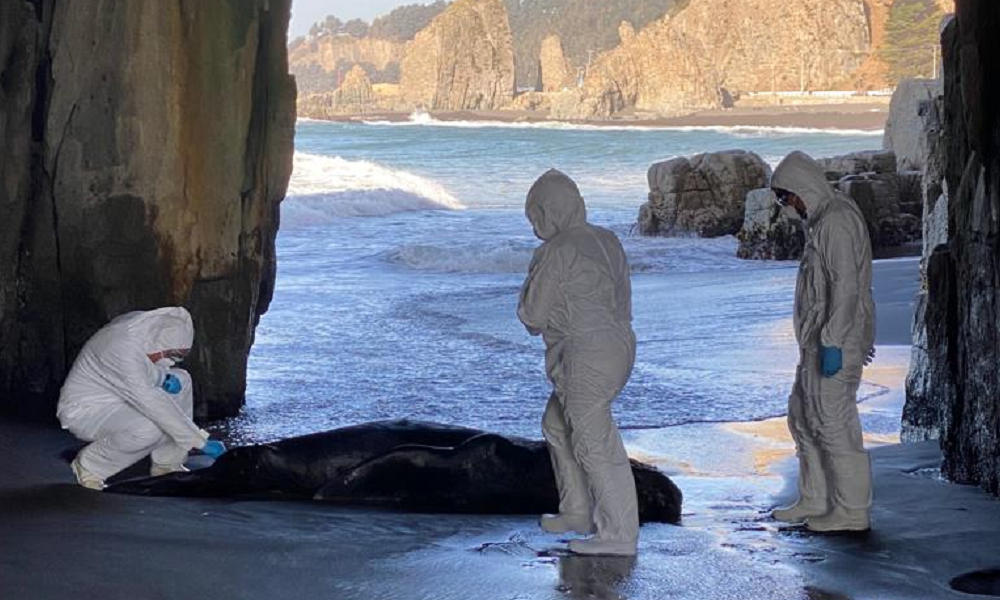
Hundreds of dead seal pups have been found on Heard Island, where Australian scientists say they observed signs consistent with H5 avian influenza.
Australia’s Department of Agriculture said the observation has not yet been confirmed as bird flu, but scientists reported unusual levels of elephant seal deaths on the island, consistent with patterns seen in previous mass mortality events linked to avian influenza.
Australian scientists reported discovering hundreds of dead seal pups in the area, according to Reuters.
Samples have been collected and will be sent to Australia for confirmatory testing when the research vessel RSV Nuyina returns in mid-November. No abnormal mortality was seen in penguins or other seabirds.
Reuters reported that if confirmed, the detection would mark the farthest south the virus has spread in the Antarctic region since it first arrived from South America in 2023. The same strain has previously been found on the nearby French Kerguelen and Crozet Islands, less than 450 kilometers (280 mi) away.
Heard Island is part of the Heard Island and McDonald Islands external Australian territory. The agency stated that even if the virus is confirmed, it would not significantly increase the risk to mainland Australia, which remains the only continent free of the H5 strain.
The 2.3.4.4b clade of H5N1, first identified in wild birds in Asia around 2020, has since become the dominant strain globally. It spread rapidly across Europe and the Americas through migratory bird routes, leading to widespread outbreaks among poultry and wild birds and unprecedented spillover into mammal populations.
The virus has increasingly been detected in mammals, including large populations of sea lions, dolphins, foxes, and livestock.
Earlier this year, the United Kingdom confirmed the first known case of H5N1 in a sheep, and outbreaks in U.S. dairy cattle affected hundreds of herds across multiple states in 2024.
These cross-species infections have raised concern among scientists about the virus’s ongoing evolution and potential risks to humans.
According to data compiled by BNO News, more than 90 human infections linked to this clade have been reported worldwide since 2022, including 77 in the United States. Additional cases have been detected in the United Kingdom, Spain, China, Mexico, Chile, and Ecuador.


Statistics On The Most Common Personal Injury Causes Reveal A Clear Outlier

7 Questions to Ask a Personal Injury Law Firm Before Hiring

4-year-old finds unsecured gun, fatally shoots 2-year-old boy in Florida

New York man arrested after livestreaming threats to kill Donald Trump Jr.
-

 Legal1 week ago
6 shot, 1 killed, at San Antonio apartment complex
-

 Legal3 days ago
Man shot and killed by police after pointing gun at people in Austin, Texas
-

 World2 days ago
Death toll from wildfire in southern Spain rises to 13
-

 Politics1 week ago
U.S. condemns China’s submarine ICBM test into Pacific
-

 World7 days ago
Ukrainian suspect in Monaco bombing found shot dead
-

 Legal1 week ago
Police sergeant, mother and daughter killed in Ohio shooting; suspect dead
-

 Legal6 days ago
San Diego deputy sentenced for shove that fractured detainee’s spine
-

 Legal6 days ago
Illinois man charged with threatening to attack Fort Bliss personnel and families