
Reviews
Disaster Reporting: Using AI Voice Tech to Quickly Interpret First-Hand Accounts in Local Dialects

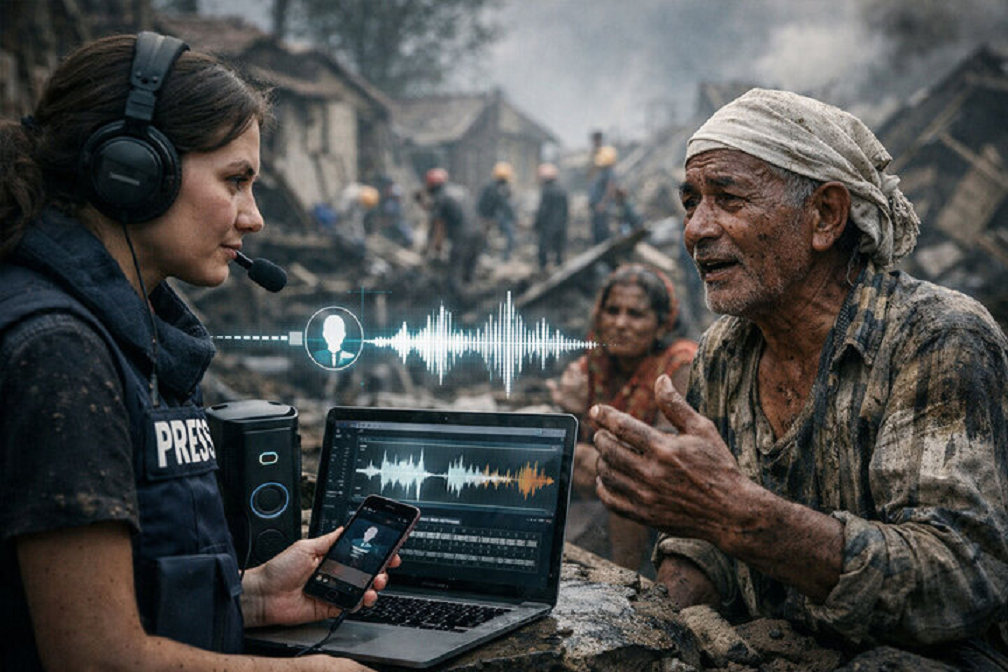
In the event of a natural disaster, the first data points are rarely found in structured press conferences or official government bulletins. Rather, initial data is inherent in what can only be described as the “audio debris” surrounding the event. A frantic voice note on WhatsApp in a flooded village, for example, or a radio show call-in in an area where earthquakes are common, or a shaky video clip in the local dialect.
In the immediate aftermath of a crisis, around 80% of the data is unstructured, involving sound, vision, and social media chatter. For newsrooms, the barrier to reporting this isn’t just speed but linguistic and acoustic friction. This is where AI voice technology is pivoting from a creative tool to a life-saving utility.
By using advanced audio models, newsrooms can now interpret, translate, and broadcast local first-hand accounts with a level of nuance that manual transcription simply cannot match in real-time. Continue reading to know how this works.
- Decoding the Acoustic of Crisis
The first challenge with eyewitness reporting is not the language; it is the surroundings.
A person talking about a falling bridge during a hurricane is often speaking through the sounds of 100km/h winds, heavy rain, or sirens in the background. The classic speech-to-text technology will fail in this high-noise situation, producing “gibberish,” which is known to cause deadly reporting mistakes.
However, contemporary voice systems powered by artificial intelligence employ neural noise suppression and intent recognition. Such systems can eliminate background noise and allow the speaker’s vocal cords to be separated from the background noise. As a study from Speech Enhancement in Real-World Environments shows, the application of artificial intelligence noise removal can increase the intelligibility of speech by a maximum of 40% in a high-decibel disaster environment. This helps the journalists convey the unfiltered truth of the environment and turn a distorted scream into an actionable location update.
- Conserving “Local Truth” in Regional Dialects
For example, where there are many languages spoken, standard language models, usually trained on ‘prestige’ accents such as Received Pronunciation or General American, may find it difficult to translate effectively. The ‘shout’ in the local dialect could include the use of specific location names, old units of measurement, and regional slang that the universal translator doesn’t recognize or pay attention to.
AI voice technology has now incorporated the use of “multi-accent” and “low-resource language” training. Instead of forcing speech into a generic form of a language, the aim is to maintain the tone and intent of the speech. This is very important as more than 40% of the 7,000 languages worldwide are at risk of exclusion by digital technology. To a journalist, it means the dangerous standardization of the news, where a warning language specific to the local area about the “washout,” or better translated as a landslip, is being obscured by the AI’s ignorance of the local language terminology.
- Raw Testimonies to Accessible Bulletins
After a locally maintained account has been interpreted, a new issue emerges in the newsroom: the issue of accessibility. When there is a power blackout or infrastructure failure, it is possible that the internet bandwidth of the citizens may not be sufficient to support high-definition video. They require “low data formats,” which could be either the radio or SMS.
AI-powered voice synthesis can also be used to immediately transfer an authenticated text message announcement from the newsroom into an audio announcement that has the richness of human voices. These voices can also be optimized to be composed and convincing.
More importantly, they can be produced to speak in the regional accent used in the affected zone to ensure that the message is believable. It has been discovered that if voices used to deliver emergency messages can be understood and lack robotic tones associated with old technology, listeners can be 30% more compliant.
- Processing High Volumes Without Compromises
The “Information Deluge” is another difficult aspect of disaster coverage. The first six hours of audio coverage can amount to thousands of hours of raw audio entered by a local newsroom. The use of AI voice technology promotes efficient audio coverage by allowing an audio summary to be generated. Smaller audio details can then be identified by reading an audio transcript to identify important highlights, thus determining what needs to be followed up on by a journalist.
This speed has significance. In disaster relief, the “Golden Hour” refers to the period of time in which precision information can most effectively save lives. With AI, the “listening” part of the process has become automated, and the exchange of information from various sources can impact enough of the population to necessitate having a national newsroom.
- The “Human-in-the-loop” and Ethical Responsibility
The “Human-in-the-loop” principle remains the industry’s ethical north star as we move further into integrating AI voice tech into a disaster workflow. AI is the engine, but the journalist is the navigator. This is what it involves:
- Verification: AI interprets the dialect; a journalist verifies the source.
- Transparency: Transparency dictates that newsrooms make it known when a bulletin is being read by a synthetic voice so that they can retain the trust of the public.
- Tone Control: Superior platforms provide editors with the opportunity to change the pitch so that the broadcast does not end up sounding inappropriately upbeat or chillingly cold during a tragedy.
- Supporting the “Solo” Field Journalist
Field reporters are known to be “one-man bands” in a disaster situation and work under extreme physical stress. The news reporters do not have the time or luxury of being seated at a desk typing their reports. The voice-assistant technology may be leveraged by reporters who can record their thoughts and observations in their own voices. The software will take their dictation and compose it into structured and well-written text. Thus, it keeps the reporter aware of the surroundings with both hands free.
Conclusion: A New Era for Audio in News
Audio is no longer second in importance to written journalism but is instead the foremost carrier of truth in the midst of a tragedy. The voices of firsthand experience dictate how an incident is received by the world, but for decades, this has been effectively muted by the obstacles of dialect, sound, and distance.
Finally, AI voice technology has closed the gap. With audio, you can go faster, talk faster, be more spontaneous, have a richer, more natural conversation, and make it very, very clear, very responsibly, very quickly, and very reliably. In other words, we are on the cusp of a world where the “local voice” is no longer a casualty of the news cycle. As the nature and scope of climate change-driven disasters increase, so too will the value to journalists of tools to help them “hear” as much as tools to help them “get it out.”


Trump notifies Congress of plan to remove Syria from terrorism sponsor list

Hazmat response tied to teen’s garage lab in Irvine, California

Man in wheelchair injured in Molotov cocktail attack in Oklahoma City

Small but rare earthquake shakes Chicago area
-

 Legal3 days ago
6 shot, 1 killed, at San Antonio apartment complex
-

 Politics2 days ago
U.S. condemns China’s submarine ICBM test into Pacific
-

 Legal7 days ago
7 sentenced in Texas detention center attack that wounded officer
-

 World6 days ago
10 Buddhist monks killed when 11-year-old crashes pickup truck in Thailand
-

 Legal2 days ago
Police sergeant, mother and daughter killed in Ohio shooting; suspect dead
-

 World23 hours ago
Ukrainian suspect in Monaco bombing found shot dead
-

 Legal6 days ago
Suspect arrested at Las Vegas-area casino after mass shooting threats
-

 Legal22 hours ago
San Diego deputy sentenced for shove that fractured detainee’s spine