
Reviews
Live Crude Oil Price Becomes a Key Indicator of Energy Market Dynamics

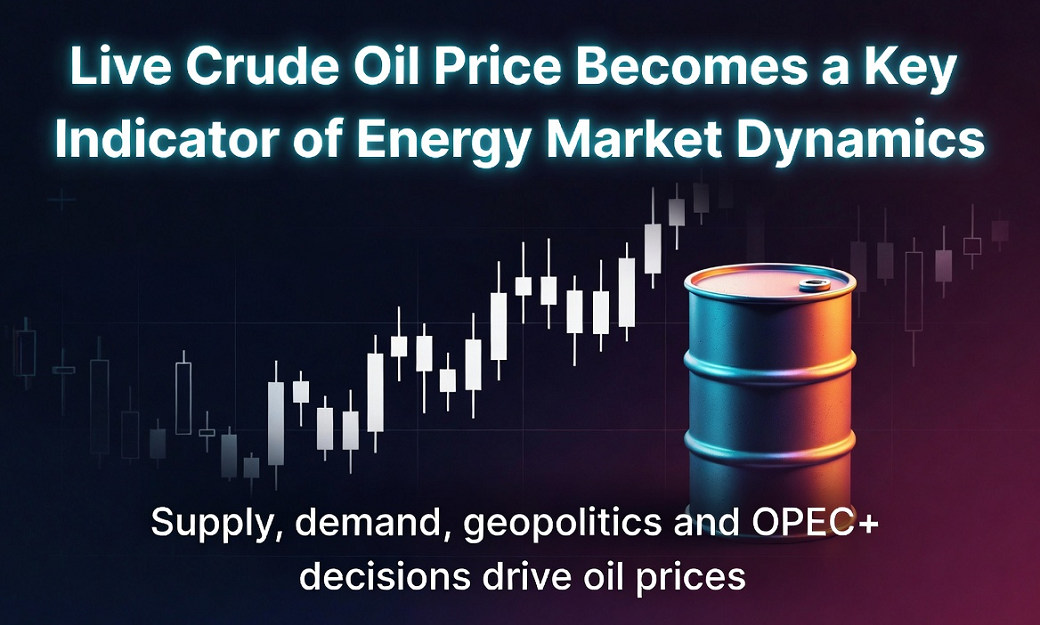
Live crude oil price movements serve as one of the most important real-time indicators of global energy market dynamics. As the primary source of transportation fuel and a key input for petrochemicals and manufacturing, crude oil directly influences inflation, corporate profits, consumer spending, and overall economic growth.
In current market conditions, the live crude oil price has become especially significant. It reflects the delicate balance between supply and demand, geopolitical risks, inventory levels, and expectations for future energy consumption. Sharp moves in oil prices often precede or confirm broader shifts in global risk sentiment and economic outlook.
I have followed crude oil markets for many years both as a trader and macro analyst. Few assets have as broad an impact on the world economy as crude oil. Before going further note that live crude oil price has evolved into a key indicator that traders and policymakers watch closely to gauge energy market dynamics.
Let’s examine what drives the live crude oil price, how it behaves in different environments, and how traders can approach this strategically important commodity.
What Drives the Live Crude Oil Price
The price of crude oil is shaped by the constant interaction of supply and demand fundamentals, geopolitical developments, and financial market sentiment.
Global economic growth remains the strongest demand driver. When factories run at high capacity and transportation activity increases, oil consumption rises, supporting higher prices. Conversely, economic slowdowns or recession fears quickly reduce demand and weigh on the price.
Supply-side factors are equally influential. Decisions by OPEC+ to cut or increase production can rapidly change the market balance. Unplanned outages, pipeline issues, or new shale output also cause noticeable shifts.
Geopolitical risks in key producing regions often add a risk premium to the price. At the same time, the strength of the US dollar plays a consistent role — a stronger dollar tends to pressure oil prices lower.
Inventory levels, particularly weekly US crude stockpiles reported by the EIA, provide important short-term signals. Large draws usually support prices, while builds signal potential oversupply.
Here is a summary of the main drivers and their typical influence on the live crude oil price:
| Driver | Typical Effect on Crude Price | Most Common Scenario |
| Strong global economic growth | Positive | Rising industrial and transport demand |
| Economic slowdown | Negative | Reduced energy consumption |
| OPEC+ production cuts | Positive | Supply tightening |
| Geopolitical tensions | Positive | Risk premium in oil-producing regions |
| Stronger US Dollar | Negative | Broad commodity pressure |
| Rising inventories | Negative | Signals of oversupply |
This table offers a quick reference for assessing potential price direction based on current conditions.
How Crude Oil Price Reacts in Practice
In strong growth phases, crude oil prices tend to climb steadily as demand outpaces available supply. During periods of economic uncertainty or recession fears, prices often fall sharply as industrial activity and fuel consumption decline.
Sudden supply disruptions — whether from conflicts or technical issues — can cause rapid upward spikes, sometimes lasting only days or weeks. Longer-term trends are more influenced by structural changes in demand, such as the pace of electric vehicle adoption and renewable energy growth.
Technically, the live crude oil price frequently respects major support and resistance zones. When these levels break with conviction, the resulting moves can extend for weeks or months.
Practical Approaches for Traders
Successful trading of crude oil requires blending fundamental awareness with technical discipline. Key events to watch include OPEC+ meetings, weekly inventory reports, and major economic data releases.
Position sizing deserves special attention due to oil’s volatility. Many experienced traders limit risk to 1% or less of their account on any single trade.
Using stop-loss orders and monitoring margin levels closely helps avoid large drawdowns during unexpected price swings.
Traders can also benefit from observing correlations. Crude oil often moves in line with risk sentiment and equity markets during normal conditions, but this relationship can decouple quickly during supply shocks.
Conclusion
The live crude oil price has become a central indicator of energy market dynamics and broader economic trends. Its movements reflect the ongoing balance between supply decisions, industrial demand, and geopolitical realities.
Traders who follow crude oil closely can gain valuable insights into global growth expectations and potential turning points. By combining fundamental analysis, technical levels, and disciplined risk management, it is possible to navigate this volatile market more effectively.
As the world continues its complex energy transition, the live crude oil price will likely remain one of the most watched benchmarks in global finance. Stay attentive to its signals, trade with clear rules, and respect the influence this vital commodity holds over the wider economy.



-

 Legal1 week ago
Man shot and killed by police after pointing gun at people in Austin, Texas
-

 World1 week ago
Death toll from wildfire in southern Spain rises to 13
-

 Politics1 week ago
U.S. sanctions 10 Cuban entities over repression and regime funding
-

 Legal7 days ago
Muslim mall worker critically injured in stabbing over his religion
-

 Legal7 days ago
New Mexico detective convicted of helping drug trafficker evade DEA operations
-

 Legal17 hours ago
Sinaloa Cartel leader ‘El Mayo’ sentenced to life in U.S. prison
-

 Legal1 week ago
New York man arrested after livestreaming threats to kill Donald Trump Jr.
-

 Legal1 week ago
Austin police release footage of fatal shooting of man who pointed gun at bystanders