
Reviews
How to Buy Insulation for House Walls: A Complete Practical Guide

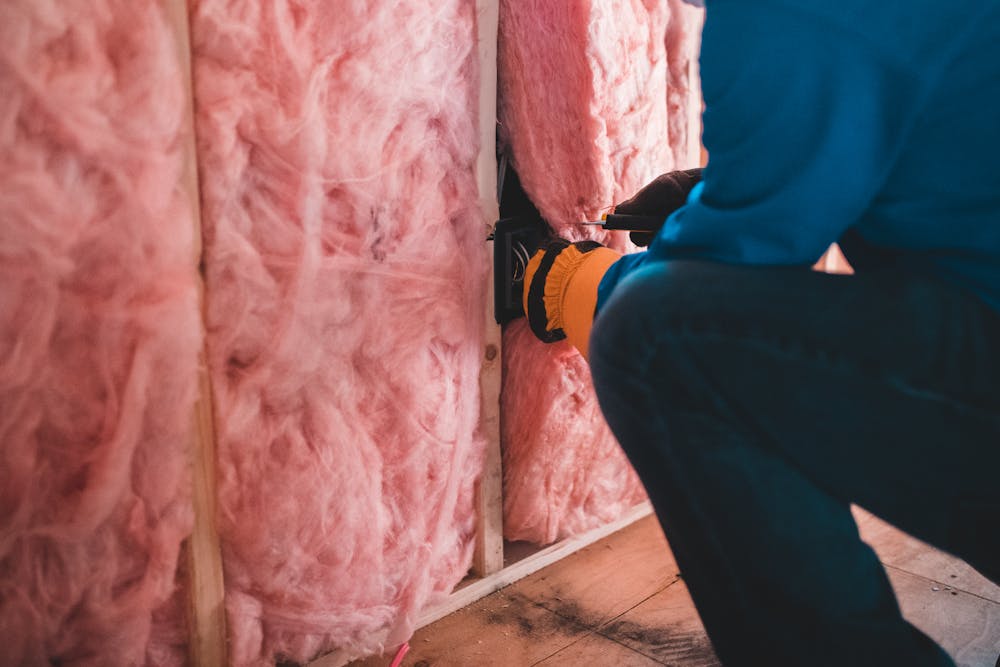
Insulation plays a key role in a house. Because of it, temperatures are manageable, energy bills remain low, and systems run efficiently. When it’s done poorly, it can cause heat leaks, overworked cooling systems, and costs piling up.
For residential construction, insulation is often framed around comfort and efficiency. But from an engineering standpoint, it’s a control layer. It regulates heat transfer, protects structural elements, and increasingly, supports electrical safety in modern buildings.
Data from global energy agencies consistently shows that wall insulation alone can account for a significant portion of a building’s thermal performance. In hot climates, especially, reducing heat ingress through walls directly lowers cooling demand.
At the same time, buildings are no longer passive structures. With EV charging, battery storage, and integrated electronics becoming more common, insulation is now expected to perform under more complex conditions. This is where the conversation moves to the need for higher-performance thermal insulators.
Understanding Your Options Before You Start Buying
Before deciding how to buy insulation, it helps to understand what you’re actually choosing between. Each material behaves differently—not just in terms of thermal performance, but also durability, safety, and consistency over time.
Fiberglass: Widely Used, Performance Depends on Installation
Fiberglass is still the most common insulation for house walls. It’s accessible, relatively inexpensive, and works well when installed correctly.
Gaps, compression, or moisture exposure can reduce its effectiveness. In controlled conditions, it performs reliably—but it is sensitive to how it’s handled onsite.
Foam Insulation: Higher Performance, More Precision Required
Foam insulation, whether rigid boards or spray-applied systems, offers stronger thermal resistance per unit thickness.
It is useful in places with small spaces or where air sealing is critical. Spray foam expands into gaps, which improves airtightness, but it requires skilled application. Poor mixing or uneven spraying can compromise the outcome.
Mineral Wool: Built for Fire and Stability
Mineral wool (or rock wool) stands out for its fire resistance and dimensional stability.
It doesn’t burn, handles moisture better than many alternatives, and maintains its structure over time. For projects where safety standards are tighter, this is often the preferred option.
MICA-Based Materials: Engineered for Extreme Conditions
Most residential projects won’t require high-performance materials, but that line is shifting. As buildings integrate more energy systems, localized heat and electrical loads become relevant.
This is where MICA insulation enters the picture. MICA materials are engineered to handle high temperatures and provide excellent electrical insulation. They are widely used in aerospace, electric vehicles, and electronics—industries where failure is not acceptable.
Axim Mica develops these advanced materials with a focus on consistency, thermal stability, and dielectric strength. While not a standard choice for typical walls, they are increasingly considered in specialized zones—such as areas around electrical systems or battery storage.
What Actually Matters When Buying Insulation
There’s no single “best” insulation. The right choice depends on how well the material matches the conditions it will face.
Thermal Performance (R-Value)
This is the starting point. Higher R-values indicate better resistance to heat flow. But it’s not just about numbers—the material must maintain that performance over time.
Fire Behavior
Not all insulation responds to heat the same way. Some materials resist ignition, while others can degrade or contribute to fire spread. In many cases, this becomes a deciding factor.
Moisture Handling
Walls are exposed to humidity, condensation, and occasional leaks. Insulation that absorbs moisture can lose effectiveness, leading to long-term issues.
Mechanical Stability
Over time, materials can compress, shift, or degrade. This reduces their effectiveness. Stability under pressure and thermal cycling is often overlooked but critical.
Electrical Insulation
This is becoming more relevant in modern buildings. Materials that offer both thermal and electrical insulation—like MICA—provide an added layer of safety in environments with higher electrical loads.
How to Buy Insulation: A Practical Workflow
A structured approach avoids guesswork and reduces the risk of underperformance.
1. Start With the Wall System, Not the Product
Understand the wall assembly. It is important to know if it’s external or internal. Or if it faces direct sun exposure, or if there are any embedded systems like wiring, batteries, or panels. The insulation must work as part of this system—not independently.
2. Define the Operating Conditions
Look at real-world conditions rather than ideal ones: temperature fluctuations, humidity levels and exposure to heat sources.
In high-heat zones, standard materials may not hold their properties over time.
3. Compare Materials on Stability, Not Just Specs
Datasheets often highlight initial performance. What matters is how the material reacts after many years.
Ask whether it compresses. Does it degrade under heat? And if it maintains insulation properties over time.
4. Check Installation Requirements Early
Some materials are forgiving. Others are not. For example, fiberglass requires careful fitting, spray foam depends heavily on application quality, and engineered materials may require precise integration.
Ignoring installation realities is one of the most common mistakes when buying insulation.
5. Evaluate Lifecycle Value
Upfront cost is only part of the equation. Consider energy savings, maintenance and replacement frequency. Higher-performance materials justify their cost over time.
Where Advanced Insulation Fits in Modern Buildings
The definition of “insulation for house” is changing. Buildings are no longer just living spaces—they are becoming energy systems.
With solar integration, EV charging, and battery storage, certain parts of a building experience higher thermal and electrical stress than before.
In these areas, conventional insulation may not be sufficient. Materials need to provide:
- Thermal resistance at elevated temperatures
- Electrical insulation for safety
- Structural integrity under load
This is where engineered thermal insulators—including MICA-based solutions—offer clear advantages.
Common Buying Mistakes That Cost More Later
Even well-planned projects can run into issues if insulation decisions are rushed.
Focusing Only on Price
Lower-cost materials often come with trade-offs in durability or performance.
Ignoring Installation Quality
A high-performance product installed poorly will underperform every time.
Overlooking Fire and Electrical Safety
These factors are often treated as secondary, but they shouldn’t be.
Choosing Based on Familiarity
Just because a material is commonly used doesn’t mean it’s the best fit for your specific application.
Not Planning for System Integration
As buildings evolve, insulation needs to support more than just temperature control.
A Practical Perspective for Technical Buyers
For engineers and sourcing teams, the approach to buying insulation is naturally more rigorous.
Material selection is tied directly to performance, safety, and compliance. There is less room for compromise.
In these environments, consistency matters as much as performance; materials must meet repeatable specifications and long-term stability is non-negotiable.
Final Thoughts: Treat Insulation as a Long-Term Investment
Buying insulation is not just about filling a wall cavity. It’s about defining how that wall will perform over time—thermally, mechanically, and increasingly, electrically.
For most residential applications, traditional materials will meet the need when selected and installed correctly. But as buildings become more complex, the role of insulation is expanding.
Understanding how to buy insulation means looking beyond immediate requirements and considering long-term performance. In some cases, that may involve integrating higher-performance materials where conditions demand it.
Because in the end, insulation isn’t just about comfort—it’s about control, reliability, and building systems that perform as expected, year after year.


Death toll from Venezuela earthquakes rises to nearly 5,000

When Is It Time to Consider a Wig? Understanding the Signs and Benefits

How Consumer Shifts Are Redefining Personal Aesthetics

States Expand Bank Powers to Combat Rising Elder Financial Abuse
-

 Legal7 days ago
Man shot and killed by police after pointing gun at people in Austin, Texas
-

 World6 days ago
Death toll from wildfire in southern Spain rises to 13
-

 Politics4 days ago
U.S. sanctions 10 Cuban entities over repression and regime funding
-

 Legal1 week ago
Maryland man sentenced to 15 years for trying to join ISIS, plotting U.S. attack
-

 Legal3 days ago
Muslim mall worker critically injured in stabbing over his religion
-

 Legal3 days ago
New Mexico detective convicted of helping drug trafficker evade DEA operations
-

 Legal4 days ago
New York man arrested after livestreaming threats to kill Donald Trump Jr.
-

 Legal4 days ago
Austin police release footage of fatal shooting of man who pointed gun at bystanders