
Politics
U.S. sanctions Cuban President Miguel Díaz-Canel

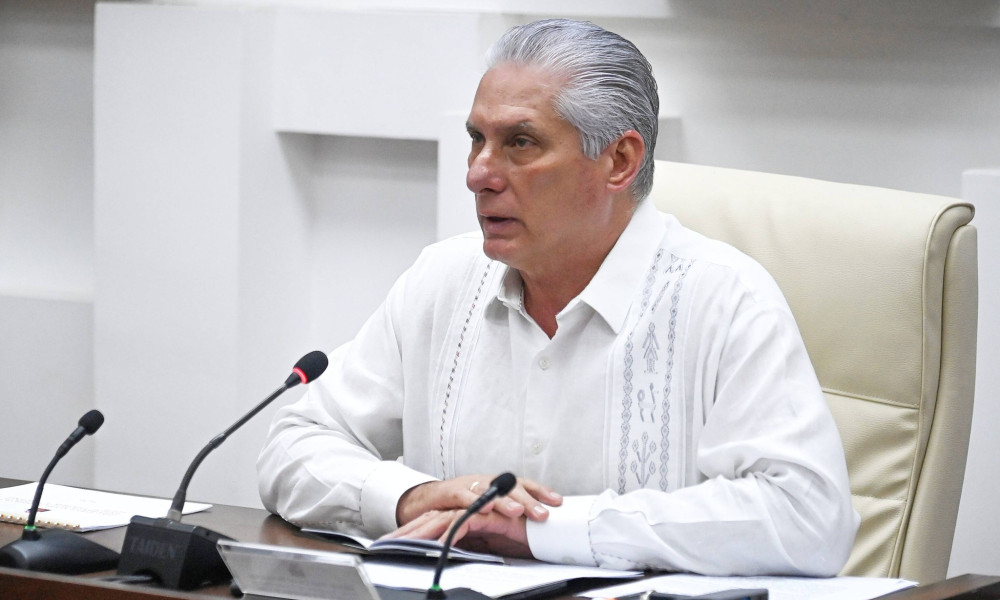
The United States has added Cuban President Miguel Díaz-Canel to its sanctions list, along with several members of Cuba’s ruling elite and state-linked entities, according to the Treasury Department.
The designations were announced on Thursday by the Treasury Department’s Office of Foreign Assets Control (OFAC), which added Díaz-Canel to the Specially Designated Nationals list.
Also sanctioned were Alejandro Castro Espín, the son of former Cuban leader Raúl Castro; Raul Alejandro Castro Calis, who was listed as linked to Castro Espín; Lis Cuesta Peraza, who was listed as linked to Díaz-Canel; and Manuel Anido Cuesta, who was listed as linked to Cuesta Peraza.
OFAC also sanctioned Cuba’s Ministry of the Revolutionary Armed Forces, known as MINFAR, along with the Committees for the Defense of the Revolution, the Cuban Institute of Friendship with the Peoples, travel agency Amistur Cuba SA and mining company Minera La Victoria SA.
The action places the named people and entities on OFAC’s sanctions list, generally blocking property and interests in property under U.S. jurisdiction and restricting dealings with U.S. persons.
Díaz-Canel, who has led Cuba since taking over from Raúl Castro and later becoming president, is the highest-ranking Cuban official named in Thursday’s action. OFAC did not immediately provide a detailed public explanation in the list update beyond the Cuba-related sanctions authority used for the designations.
The sanctions come weeks after the Justice Department unsealed charges against Raúl Castro and five other men in the 1996 Cuban shootdown of two unarmed Brothers to the Rescue aircraft over international waters, which killed four people, including three U.S. citizens.
Díaz-Canel called the indictment a political action “without any legal basis,” accusing the United States of lying and manipulating the 1996 shootdown. He said Cuba acted in “legitimate defense” after repeated violations of its airspace.


England beats France 6-4 to claim 3rd place at World Cup

Ontario premier calls Trump’s Canada wildfire tariff threat ‘unacceptable’

10 bodies found in Zacatecas, Mexico, including 5 hanging from bridge

Gulf system could become tropical depression near Florida
-
 Legal1 week ago
Man shot and killed by police after pointing gun at people in Austin, Texas
-
 World6 days ago
Death toll from wildfire in southern Spain rises to 13
-
 Politics5 days ago
U.S. sanctions 10 Cuban entities over repression and regime funding
-

 Legal4 days ago
Muslim mall worker critically injured in stabbing over his religion
-
 Legal4 days ago
New Mexico detective convicted of helping drug trafficker evade DEA operations
-
 Legal5 days ago
New York man arrested after livestreaming threats to kill Donald Trump Jr.
-
 Legal5 days ago
Austin police release footage of fatal shooting of man who pointed gun at bystanders
-
 World1 week ago
Shoe factory fire kills 28 people in China