
Reviews
When Security Planning Fails, the Cost Shows Up Later

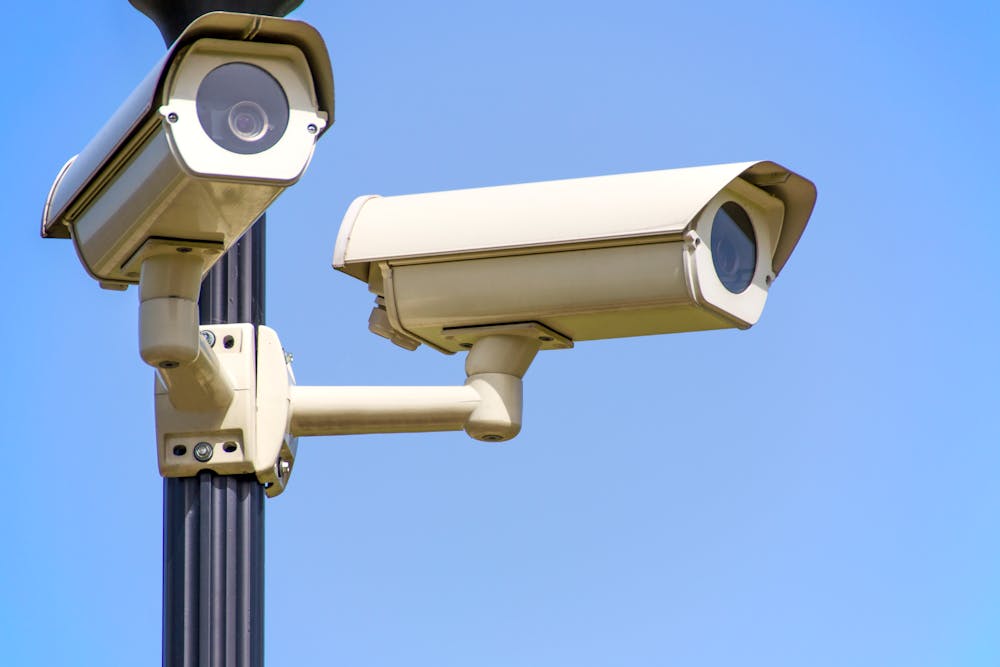
A door is left on the schedule but not really covered. The front desk assumes someone else is watching the cameras. A delivery arrives after hours, and no one is clear on who has authority to check it. Nothing dramatic happens that first week, and that is exactly why weak planning survives inside so many operations.
In newsrooms, government offices, managed buildings, and public-facing facilities, security work is often judged by what does not happen. That creates a blind spot. The real damage from poor planning shows up later: overtime that was never expected, gaps in coverage during staff turnover, delays in response, and a slow erosion of trust among employees, tenants, visitors, and leadership.
The challenge is that many organizations only notice the weakness after a disruption forces the issue. By then, the operation may already be dependent on habits, not systems. A site that looks stable in calm conditions can become fragile when schedules change, an incident unfolds, or one key person is unavailable.
Why the downstream costs are the real story
A weak security vendor rarely fails all at once. More often, the trouble appears after onboarding, when the site is already dependent on the service. A post that looked covered on paper becomes unreliable in practice. Reports are vague. Escalation chains are not followed. Supervisors spend time correcting basic mistakes instead of managing risk. This is usually where buyers start looking at central monitoring services more carefully in real-world conditions.
That creates operational drag. It also creates liability. If an incident occurs and the record shows poor planning, inconsistent staffing, or unclear monitoring procedures, the issue is no longer only about a missed shift. It becomes a question of whether the organization took reasonable steps to protect people and property.
There is also a reputational cost that is easy to overlook. Staff notice when coverage feels thin. Visitors notice when access control is inconsistent. In public-facing settings, even small breakdowns can shape how a facility is perceived. Once confidence drops, every minor issue feels larger because people no longer assume the basics are under control.
What good planning has to get right
The best security programs do not look impressive at a glance. They look boring, orderly, and hard to break. That is the point. The details matter more than the posture.
Effective planning starts with a clear understanding of what the site actually needs, not what sounds sufficient in a proposal. A building with sensitive information, frequent visitors, or overnight activity needs different controls than a quiet property with limited access. The plan has to reflect risk, timing, and the consequences of failure.
Coverage has to be real, not theoretical:
Many sites discover too late that their coverage model only worked when every post was fully staffed and every shift started on time. That is not a plan. It is a hope. Reliable protection depends on how the program handles call-outs, handoffs, visitor flow, and off-hours conditions.
In facilities with public access or changing traffic patterns, the staffing model should match the building’s actual rhythm, not a neat spreadsheet version of it. A guard who is present but not briefed is not coverage. A camera feed nobody reviews is not monitoring.
Good planning also accounts for predictable strain points: shift changes, lunch breaks, weekend scheduling, special events, and weather-related disruptions. Those are the moments when a site is most likely to miss something important if procedures are not tight and supervision is not active.
Response time matters more than reassuring language:
After onboarding, weak vendors often lean on general promises: reports will be sent, issues will be escalated, supervisors will follow up. In practice, none of that matters if there is no clear response path when something happens at 2 a.m. or during a busy public event.
The useful question is not whether the provider sounds experienced. It is whether they can show how an incident moves from detection to action, who gets contacted, what happens if the first contact does not answer, and how the site is stabilized without confusion. Subtle delays become expensive fast when continuity depends on quick decisions.
A workable response plan should also define the difference between routine observation and urgent escalation. Not every issue should trigger the same reaction, but every issue should trigger a known one. That clarity keeps small problems from being ignored and serious problems from being overhandled.
- Define who is notified first, second, and third.
- Set response thresholds for different incident types.
- Test what happens when the first escalation fails.
The hidden blind spot: assuming handoffs are self-explanatory:
One operational blind spot is the handoff. A lot of security programs fail at the seam between contractor, building management, and internal staff. Each side assumes the other knows the routine. No one owns the small but essential steps: logging a concern, verifying a visitor, documenting an unusual vehicle, or confirming a door problem before the end of shift.
That is where trouble multiplies. One missed note becomes a repeated mistake. One unconfirmed issue becomes a recurring vulnerability. It is rarely the large failure that hurts first. It is the accumulation of small, undocumented assumptions.
The fix is rarely dramatic. It is usually a matter of defining ownership, documenting the chain of communication, and making sure every shift knows what must be passed forward before the next team arrives.
A more reliable way to set the work up
Good security planning starts before the first shift. It should force hard questions about the site, the hours, the public profile, and the consequences of a missed task.
The goal is not to create paperwork for its own sake. The goal is to turn security from a loosely managed function into an operating system that can be checked, measured, and corrected before a problem becomes visible to everyone else.
- Map the site by risk, not by habit. Identify entrances, sensitive areas, visitor patterns, after-hours activity, and points where a lapse would create real exposure. If a location handles the public, that mapping should include crowd movement, delivery windows, and the moments when staff are most likely to be stretched thin.
- Write down response expectations in operational terms. Not vague service language, but the actual sequence: who checks the alarm, who calls management, who documents the event, and who can authorize a change in posture. If the process is not written, it will be interpreted differently every time.
- Audit the first 30 days closely. That is when weak staffing, poor communication, and sloppy supervision usually show themselves. Look for recurring corrections, missed logs, uneven patrols, and gaps in follow-up. If those patterns appear early, they will not improve on their own.
The real test is whether the program reduces pressure
A mature security program does more than stand at a door or watch a monitor. It lowers uncertainty for the people running the site. That matters in news environments, civic buildings, and mixed-use properties where activity changes fast and the margin for error is thin. When the plan is sound, leadership spends less time guessing whether the basics are handled. When it is weak, every minor issue becomes a management distraction.
There is a trade-off here that some organizations avoid admitting: tighter control can feel less flexible at first. It may require clearer rules, more documentation, and less tolerance for improvisation. But that discipline usually prevents a larger mess later. In security, convenience often looks cheap until it becomes a continuity problem.
This is especially true when the organization depends on public trust. A facility that serves employees, residents, journalists, tenants, or visitors cannot afford a security model that only works when conditions are ideal. Resilience matters more than appearance. The better question is not whether the program seems sufficient on a calm day, but whether it can still function when conditions become messy and attention is pulled in several directions at once.
Planning that holds up under pressure
Security work is easy to underestimate when things are quiet. That is why poor planning persists. It does not announce itself with alarms. It surfaces through missed details, slow escalation, uneven staffing, and the kind of confusion that costs more to fix after the fact.
For organizations that carry public trust, manage sensitive spaces, or simply cannot afford operational drag, the standard should be higher than presence alone. A workable plan is one that still functions when someone is absent, traffic changes, or an incident lands outside business hours. That is where the real value is found: not in the promise of control, but in the ability to keep control when conditions stop being convenient.


Death toll from Venezuela earthquakes rises to nearly 5,000

When Is It Time to Consider a Wig? Understanding the Signs and Benefits

How Consumer Shifts Are Redefining Personal Aesthetics

States Expand Bank Powers to Combat Rising Elder Financial Abuse
-

 Legal7 days ago
Man shot and killed by police after pointing gun at people in Austin, Texas
-
 World6 days ago
Death toll from wildfire in southern Spain rises to 13
-

 Politics4 days ago
U.S. sanctions 10 Cuban entities over repression and regime funding
-

 Legal1 week ago
Maryland man sentenced to 15 years for trying to join ISIS, plotting U.S. attack
-

 Legal3 days ago
Muslim mall worker critically injured in stabbing over his religion
-

 Legal3 days ago
New Mexico detective convicted of helping drug trafficker evade DEA operations
-

 Legal4 days ago
New York man arrested after livestreaming threats to kill Donald Trump Jr.
-

 Legal4 days ago
Austin police release footage of fatal shooting of man who pointed gun at bystanders