
Politics
Trump declares national emergency over Cuba, authorizes tariffs on countries supplying oil

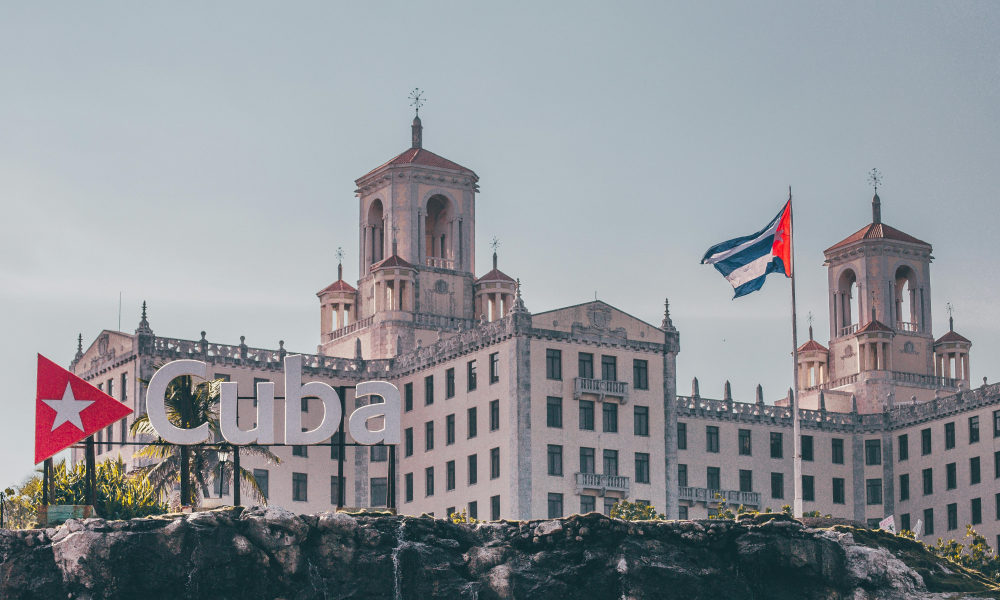
President Trump signed an executive order declaring a national emergency over what he described as an extraordinary threat posed by the Cuban government and authorizing new tariffs on countries that supply oil to the island.
The order, signed Thursday, cites national security and foreign policy concerns and invokes authorities under the International Emergency Economic Powers Act and the National Emergencies Act.
Trump said Cuba’s actions and alliances constitute an “unusual and extraordinary threat” to the United States.
In the order, Trump accused the Cuban government of supporting hostile foreign powers and transnational militant groups, including Russia, China, Iran, Hamas, and Hezbollah.
The order alleges Cuba hosts advanced foreign intelligence capabilities, including Russia’s largest overseas signals intelligence facility, and continues to expand defense and intelligence cooperation with China.
Trump also accused the Cuban government of human rights abuses, political repression, and censorship, saying the regime persecutes political opponents, restricts free speech and press, and retaliates against families of political prisoners.
To address the declared emergency, the order authorizes the imposition of additional tariffs on goods imported into the United States from any country that directly or indirectly sells or provides oil to Cuba.
Under the order, the Secretary of State, working with the Treasury Department, the Commerce Department, the Department of Homeland Security, and the U.S. Trade Representative, would determine whether and to what extent tariffs should be imposed.
The executive order authorizes ongoing monitoring of oil shipments to Cuba and requires periodic reports to Congress on actions taken under the declared national emergency.
The order is scheduled to take effect at 12:01 a.m. Eastern time on Jan. 30.
The action follows Trump’s recent statements that Cuba’s government is nearing collapse due to the loss of foreign oil and financial support after the U.S. operation to capture Maduro in Venezuela.
Cuba has long depended on imported oil to sustain its power grid and economy. That support narrowed further this week after Mexican President Claudia Sheinbaum confirmed that Mexico has stopped shipping oil to the island.


12-year-old, relative drown in Virginia pond during rescue attempt

3 women killed, over 30 injured in fireworks explosion in Mexico

1 dead, 6 injured in shooting at large party near Morgan Hill, California

Couple identified after family of 8 found dead in suspected Michigan murder-suicide
-
 Legal15 hours ago
Couple identified after family of 8 found dead in suspected Michigan murder-suicide
-

 World1 day ago
NATO intern arrested in Belgium over suspected espionage
-

 World5 days ago
Houthis claim missile and drone attacks on 2 Saudi oil tankers in Red Sea
-
 Politics4 days ago
U.S. sanctions new CJNG leader, more than 50 people and companies
-

 US News5 days ago
All 4 U.S. soldiers killed in Jordan and Iraq identified
-

 Legal4 days ago
2 Indianapolis police officers shot during disturbance call
-
 World6 days ago
Death toll from Guyana ferry disaster rises to 53
-
 Legal4 days ago
Puerto Rico man charged over threats to bomb White House, attack soldiers and Jewish people