
Business
The Craft Behind the Glamour: Inside South Asia’s Celebration Wardrobe

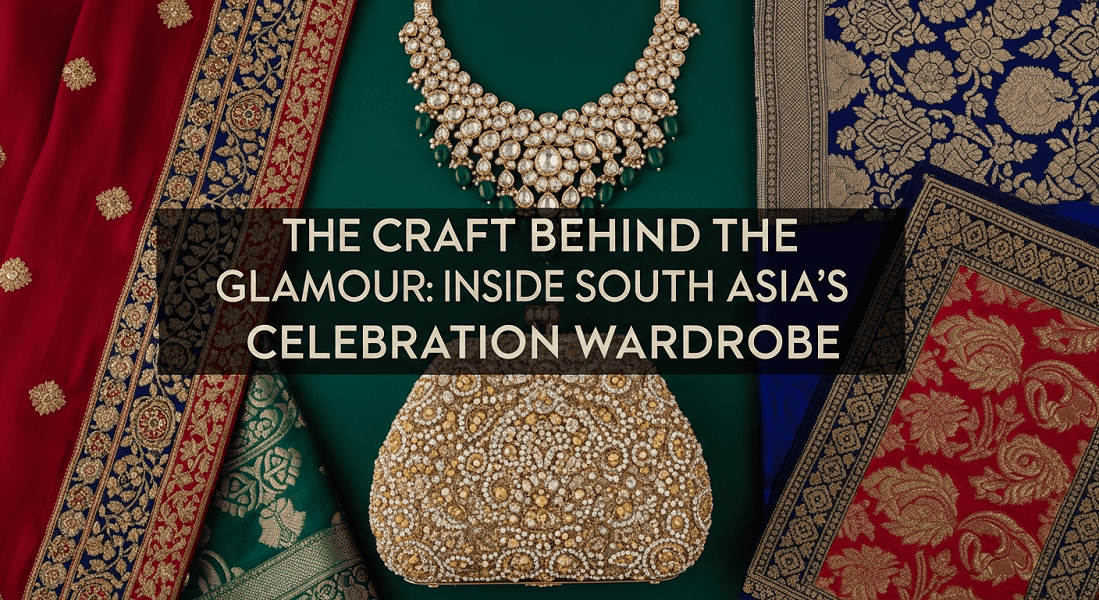
There is a certain kind of captivating nature associated with any South Asian celebration. It is that moment of quiet before the music begins and the lights are turned down, when someone walks in wearing an embroidered lehenga that gleams with the kind of detail that can only be created by human hands. You can almost hear the story in the fabric, the soft whispers of artisans, and generations of skill, achieving a reverence for beauty.
In South Asia, glamour doesn’t come out of a factory. It is built stitch by stitch, hour by hour, in small buildings and sun-drenched courtyards, where patience is created through creativity. This is where zari, gota, and hand embroidery are not simply techniques, but techniques rooted in traditions.
Zari: The Golden Thread of Heritage
If you’ve ever run your fingers over the gold and silver threads glinting on a dupatta, you’ve met zari, one of South Asia’s oldest art forms. Historically, zari was made from real gold and silver, drawn into fine wires and spun around silk threads. In Mughal times, it was the mark of royalty. Today, it still carries that same quiet power, elegance without arrogance.
Zari’s contributions extend beyond the beautification of garments; they breathe life into garments. That is why a pastel ensemble can suddenly blossom in the light. The border on a pseudo-printed sari or the intricate embroidery on a bridal ensemble evokes centuries of luxury artisanal craft.
Contemporary Pakistani and Indian designers have figured out how to keep zari engaged, whether that is in sheer pieces, less opulent ratios of the application, or in a Western structure. This is not nostalgia, this is development.
Gota: The Spark of Celebration
If zari is elegance, gota is energy. This Rajasthan-born technique uses narrow ribbons of gold or silver, appliquéd onto fabric to create patterns that dance in the light. Traditionally, the gota work was worn during festivals, weddings, and royal processions, occasions that demanded joy.
Today, gota has gone global. Designers in Lahore and Karachi are giving it a fresh spin, pairing it with silk tunics, cropped jackets, and even fusion wear that fits easily into a modern wardrobe.
It’s playful, it’s versatile, and it’s unapologetically festive. You can see it in the confident glint of a sleeve, the edges of a dupatta, or even the hem of a jumpsuit designed for destination weddings.
The Unseen Hands Behind the Sparkle
Behind every spectacular wedding outfit or festive dress is a whole community of craftspeople that most of us never get to see. In cities such as Multan, Lucknow, and Jaipur, artisans spend hours, sometimes even days, perfecting a single motif.
The work is deliberate and meticulous. Each sequin is sewn by hand, and every pattern is balanced and completed accurately. Typically, these women and men are the ones who will never walk our runways. In contrast, their handiwork is often what makes up the luxury of regional craftwork.
Even more surprising is that people outside of South Asia are starting to appreciate their handiwork and techniques. Now, global fashion houses are commissioning South Asian craftspeople using intricate stitching with higher-end apparel. The result is clothing that is cultural, grounded, and modern.
A New Chapter in South Asian Couture
You no longer have to attend a wedding in Lahore to spot this artistry. It’s crossing borders, showing up in fashion weeks, on red carpets, and across social media. Modern South Asian designers have mastered the art of storytelling through design. They’re celebrating heritage without being weighed down by it.
Take Sana Safinaz and Elan, for instance; they bring soft pastels, fine handwork, and fluid draping to the global stage. Maria B brings color and youthfulness. HSY transforms old-world glamour into something bold and cinematic. Together, they’re shaping the narrative of what modern elegance means in the region.
It’s no surprise that Pakistani dresses are now coveted by women from London to Dubai, not as cultural curiosities, but as symbols of timeless sophistication.
Why It Matters More Than Ever
In a world of fast fashion, something special is handmade clothing. Every item has a spirit; it’s been touched by someone’s work, with little flaws that make it specific.
Buying a handmade garment is distinct from a luxury experience. It’s about community, culture, tradition, and ownership. It’s horizontal; it has meaning.
Those artisans are not just keeping culture alive; they are changing what luxury means. It’s not about logos or labels anymore; it’s about authenticity. It’s about experience.
Fashion Meets Emotion
These garments mean more than looking good to women. They are wrapped in memory, such as a mother’s wedding sari put away for safekeeping, or the sound and feel of a dupatta borrowed from an older sister.
Even in a globalized world, that emotional tug is what perpetuates South Asian couture. The newer generation is not abandoning tradition; they are remixing tradition. They are dressing in a gota-trimmed kurta with jeans, or borrowing a dupatta over a minimalist dress. It’s an attitudinal tradition.
Bringing It All Together
South Asian celebration wear isn’t just about glitter and glam; it’s about legacy. Every technique, from zari to gota, from mirror work to tilla, tells a story of artistry passed down through hands, not machines.
As global fashion becomes more inclusive and experimental, these crafts have found their rightful place in the spotlight. They’re no longer “ethnic”, they’re simply beautiful.
And for anyone who’s ever fallen in love with the shimmer of a handmade outfit, that’s reason enough to celebrate.
Final Thoughts
Next time you see a lehenga shining under the lights of a wedding, take a moment to stop and observe it. The sequins and shimmer hold a world of skill, patience, and passion. The glamour may attract all your attention, but it is the craftsmanship that will make you fall in love with it.


12-year-old, relative drown in Virginia pond during rescue attempt

3 women killed, over 30 injured in fireworks explosion in Mexico

1 dead, 6 injured in shooting at large party near Morgan Hill, California

Couple identified after family of 8 found dead in suspected Michigan murder-suicide
-
 Legal14 hours ago
Couple identified after family of 8 found dead in suspected Michigan murder-suicide
-

 World1 day ago
NATO intern arrested in Belgium over suspected espionage
-

 World5 days ago
Houthis claim missile and drone attacks on 2 Saudi oil tankers in Red Sea
-

 Politics4 days ago
U.S. sanctions new CJNG leader, more than 50 people and companies
-

 US News5 days ago
All 4 U.S. soldiers killed in Jordan and Iraq identified
-

 Legal4 days ago
2 Indianapolis police officers shot during disturbance call
-

 World5 days ago
Death toll from Guyana ferry disaster rises to 53
-

 Legal4 days ago
Puerto Rico man charged over threats to bomb White House, attack soldiers and Jewish people