
Reviews
Making Multilingual Education Measurable — How Olga Sokolova Proves the Power of an Inclusive Approach

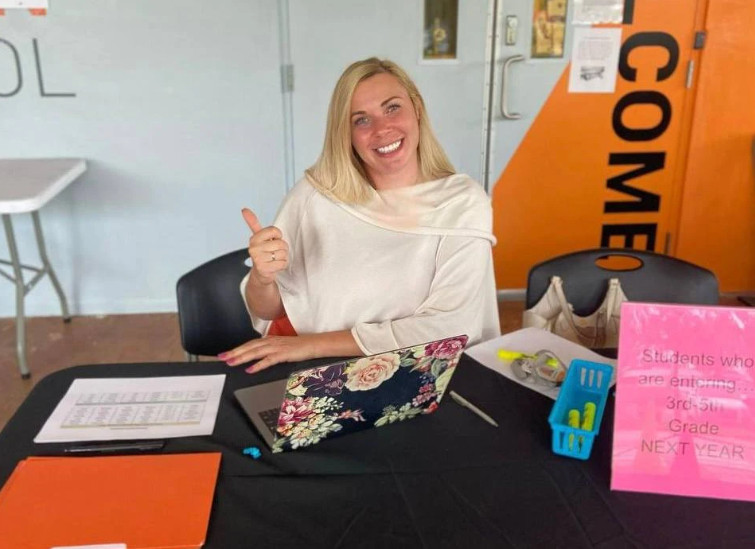
More than 5.3 million students in U.S. schools are learning English as a second language—over 10.6% of all public school students—and the number continues to grow each year, according to the National Center for Education Statistics. These children come from dozens of countries, bringing diverse cultures, academic backgrounds, and, in some cases, interrupted schooling. That diversity presents real challenges for teachers—but also a chance to build a system where difference becomes a strength rather than a barrier.
Olga Sokolova, Director of the International Students Department at Championship Academy of Distinction in Hollywood, Florida, knows this reality firsthand. Born in Ukraine into a Russian-speaking environment of the former Soviet Union, she faced language barriers early in life. Later, after immigrating to the United States, she watched her own son struggle with English in a new school system. That personal experience became the foundation of her mission: to build programs that help children not lose their native language while confidently mastering English—and succeed both in testing and in life. Today, Olga not only leads an ESOL program serving 190 students from 23 countries, but also runs Spanish Sunday School, an online language school that teaches languages without stress, with a focus on communication and culture. Her book on stress-free language learning, published in February 2026, is already helping parents and teachers worldwide.
Sokolova combines a passion for languages—from Japanese, which she fell in love with while living in Japan, to Spanish and Russian—with a practical, results-driven approach in which everything is measurable —from test scores to students’ confidence. She defines her goal as “demystifying” language learning—it should never feel overwhelming. What matters to her is that students and their families feel confident and can communicate effectively. And she has found a way to make that happen in practice.
A School System Under Strain
Today, the U.S. education system often feels like an overloaded ship. In Florida alone, according to Sokolova, there is a shortage of more than 10,000 teachers, especially in math, reading, ESE (Exceptional Student Education), and ESOL. New teachers are overwhelmed by expectations, while veterans grow tired of constant policy shifts and increasing “customer service” pressure from parents. Meanwhile, students in ESOL and ESE programs make up a growing group that needs intensive academic support across subjects to keep up and pass state tests.
Sokolova sees the problem as deeper than a lack of resources—it is a lack of systemic leadership that connects all the pieces. At her school, where many students arrive with interrupted formal education (SLIFE), she introduced data-driven approaches so teachers can focus their energy where it truly matters.
“New teachers often feel overwhelmed by expectations and responsibilities, while veteran teachers experience fatigue from constant changes, rapid shifts to online education, and increased pressure related to parent communication,” Sokolova notes.
These are not abstract ideas. Under her leadership, the school achieved 100% compliance in district ESOL monitoring, exited the improvement plan in that category, and rose to the 45th national percentile in ESOL performance. It is a clear example of how strong management can turn chaos into measurable progress.
A Journey That Shaped a Leader
Sokolova did not come to education straight from university—her path to the classroom was long and unconventional. She began her career in international business, working as Chief Guest Relations Officer for the Japanese cruise line MSC and later as head of the Davis Manafort office in Kyiv. Life in Japan taught her the nuances of language and culture, while Ukraine taught her how to adapt to constant change. But the real turning point came when she saw her son struggling with English in an American school—and decided to apply her experience to education.
For her, a school is not just an organization but a complex living system that connects people from different worlds, where respect and empathy ultimately make the difference.
“International experience gives me a strong foundation for working in the U.S. public school system, fostering cultural awareness, adaptability, and a deep understanding of diverse perspectives,” Olga recalls.
That background helps her quickly diagnose students’ needs—from Slavic phonetics to the balance between Spanish and English. Today, her work is gaining wider recognition: she served as a judge at prestigious competitions such as ABCarnival in 2025, was named to Marquis Who’s Who Top Educators, and regularly shares her expertise through webinars on spanishsundayschool.net. Her 2026 book is another step toward making language education accessible on a global scale.
Data as a Compass
At Championship Academy, Sokolova has built a system driven by analysis: observation, data, and strategic reallocation of resources. She created progress trackers for ESOL students, implemented push-in and pull-out support models, and introduced tutoring on Saturdays and during school breaks. These are not just plans on paper—they are moves that deliver measurable results, such as reaching math growth targets by mid-year. The outcomes are backed by data: 100% compliance on assessments like FAST and WIDA, as well as continuous professional development for teachers through training and coaching. Management, in this model, becomes a tool for real breakthroughs.
One striking example is a fourth-grade student who was labeled “misbehaving” because of his behavior—but turned out to be gifted. Sokolova redesigned his learning plan, and he went on to earn perfect scores on state tests, receive the Governor’s Certificate, and be officially identified as gifted.
“Strong organizational skills, the ability to multitask, logical thinking, careful observation, and data-driven decision-making are essential in today’s educational environment,” she says.
Trust as the Foundation
Sokolova believes that behavior is a form of communication—whether from a child or from a teacher. She builds trust through weekly meetings where educators share concerns, openly discuss challenges, and work together on solutions.
“Without trust, monitoring and data analysis can feel like control or judgment, and teachers may resist, comply superficially, or disengage,” Olga emphasizes.
As a former teacher herself, she knows the pressure from the inside—from certifications to daily classroom challenges. In her approach, teachers are like students: they need support to grow.
“Teachers face frequent challenges, heavy responsibilities, and high expectations, so regular weekly or monthly meetings are essential to strengthen communication and openly discuss difficulties and solutions,” she explains.
In a multilingual environment, this creates a safe atmosphere where cultural differences do not divide but enrich the team. The result is a cohesive staff ready for change and innovation, even within strict state regulations.
A Global Perspective in Every Classroom
Living in Japan, Ukraine, and the United States has given Sokolova a simple but powerful insight: diversity is not a problem—it is a shared foundation. She brings this into the classroom by helping students preserve their native languages while learning English and by implementing MTSS (Multi-Tiered System of Supports) for academic, behavioral, and emotional needs.
“We are different and yet the same, and when we understand and respect our differences, we discover how much we actually have in common,” Olga says. “Working in different cultures builds strong communication skills, cultural awareness, and the ability to navigate challenges with fairness and professionalism.”
Her international experience helps schools adapt to a reality where students from 23 countries require not standardized lessons, but personalized support. Relying on multiculturalism allows schools not just to survive in a diverse environment, but to turn it into an advantage for every child. And the results speak for themselves: higher test scores, lower dropout rates, and students better prepared for a world where languages and cultures open doors—and become keys to success.


12-year-old, relative drown in Virginia pond during rescue attempt

3 women killed, over 30 injured in fireworks explosion in Mexico

1 dead, 6 injured in shooting at large party near Morgan Hill, California

Couple identified after family of 8 found dead in suspected Michigan murder-suicide
-
 Legal14 hours ago
Couple identified after family of 8 found dead in suspected Michigan murder-suicide
-

 World1 day ago
NATO intern arrested in Belgium over suspected espionage
-

 World5 days ago
Houthis claim missile and drone attacks on 2 Saudi oil tankers in Red Sea
-

 Politics4 days ago
U.S. sanctions new CJNG leader, more than 50 people and companies
-

 US News5 days ago
All 4 U.S. soldiers killed in Jordan and Iraq identified
-

 Legal4 days ago
2 Indianapolis police officers shot during disturbance call
-

 World5 days ago
Death toll from Guyana ferry disaster rises to 53
-

 Legal4 days ago
Puerto Rico man charged over threats to bomb White House, attack soldiers and Jewish people