
Reviews
U.S.–Malta Relations: A Strategic Partnership in the Mediterranean

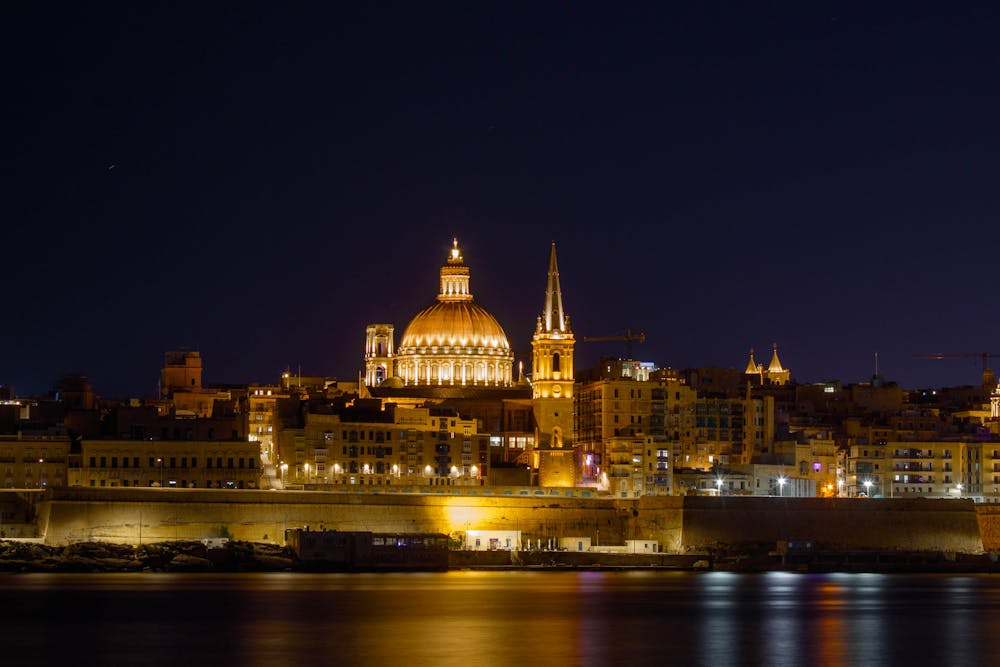
Malta’s relationship with the United States is often described through diplomatic anniversaries, but its real importance is geographic, political and operational. The two countries established full diplomatic relations after Malta’s independence in 1964, giving the partnership a long post-colonial arc that now stretches across security, trade, migration, education and multilateral diplomacy. Malta is not a large power, but it sits in a position where large-power interests meet: Southern Europe, North Africa, the Central Mediterranean, maritime routes, energy corridors and migration pathways. That location gives Valletta more strategic relevance than its population or land area suggests.
Why Washington pays attention to Valletta
The United States sees Malta as a stable democratic partner in a region where instability can move quickly across borders. Libya, Tunisia, the Sahel, the Middle East and Southern Europe all influence Malta’s security environment. For Washington, this makes Malta useful in areas such as maritime monitoring, sanctions enforcement, border security, aviation links, customs controls and diplomatic engagement. For Malta, the United States offers political reach, technical support, business access, educational exchange and a security relationship that does not require Malta to abandon its careful foreign-policy balance.
Malta’s value is also economic and institutional. It is an English-speaking EU member state with a legal system familiar to international investors, professional services firms, shipping operators and technology companies. That matters for American businesses looking at Europe, the Mediterranean and North Africa from one base. In the same way that company registration in Malta is often considered by firms seeking an EU foothold, the wider U.S.–Malta relationship is shaped by access: access to markets, ports, regulators, diplomatic channels and regional intelligence.
Security cooperation without exaggerating Malta’s military role
Malta is not a military heavyweight, and any serious analysis should avoid pretending otherwise. Its strategic function is more practical: customs enforcement, port oversight, maritime awareness, border management and resilience against illicit flows. The U.S. Embassy in Malta states that the U.S. government has provided more than $3 million in assistance to Malta, including training, equipment and export control guidance for Maltese Customs. This is not headline-grabbing defence policy, but it is precisely the kind of cooperation that matters in the Mediterranean, where smuggling networks, sanctions evasion, dual-use goods and irregular maritime activity can overlap.
A useful way to read the relationship is this: Malta does not need to host large military assets to be strategically relevant. It can contribute through competent institutions, clean ports, reliable information-sharing and disciplined enforcement. In my view, that is where Malta’s strongest security value lies. Small states often lose credibility when they try to sound larger than they are. Malta is more convincing when it acts as a trusted maritime and legal node between Europe and the wider Mediterranean.
Neutrality, NATO and the art of careful alignment
Malta’s neutrality remains central to its foreign-policy identity, but neutrality does not mean isolation. In 2024, Malta and NATO agreed a new Individually Tailored Partnership Programme covering areas such as cyber defence, human security, hybrid threats, resilience and defence reform. This does not make Malta a NATO member, nor does it erase domestic sensitivities around neutrality. It does show that Malta can cooperate with Western security institutions on practical risks without presenting itself as an alliance frontline state.
For the United States, this arrangement is useful because it strengthens Malta’s capacity in areas that affect regional security. For Malta, it creates room for cooperation without sacrificing diplomatic flexibility. The balance is delicate. Too much alignment could weaken Malta’s credibility with some Mediterranean and non-aligned partners. Too much distance could leave Malta underprepared for cyberattacks, disinformation, port-security risks and regional shocks.
The Mediterranean migration pressure point
Migration is one of the most sensitive areas in which Malta’s geography shapes its politics. Routes from North Africa place Malta near search-and-rescue zones, asylum pressures, human-trafficking networks and EU burden-sharing disputes. The United States does not control Malta’s migration policy, but it has an interest in the same underlying problems: instability in Libya, organised smuggling, weak border institutions, humanitarian crises and regional insecurity. A narrow border-security reading misses the point. Migration in the Central Mediterranean is connected to war, labour markets, climate stress, maritime rescue obligations and European political pressure.
Malta’s diplomatic voice at the United Nations
Malta’s 2023–2024 term on the United Nations Security Council showed how a small country can gain visibility when it uses multilateral platforms well. Malta concluded its two-year term in December 2024, presenting its role around peace, international security and multilateral engagement. For U.S.–Malta relations, this matters because Malta is not only a bilateral partner; it is also a voting state, negotiating actor and agenda participant in global forums.
That does not mean Malta and the United States always agree. They may differ on Middle East diplomacy, neutrality, taxation, migration policy or EU regulatory questions. Mature partnerships allow disagreement without collapsing into distrust. Malta’s recognition of Palestinian statehood in 2025, for example, placed it within a wider group of states supporting a two-state framework while maintaining its own diplomatic position.
Where the partnership can become more useful
The next phase should be less ceremonial and more technical. U.S.–Malta cooperation would be strongest in maritime technology, cyber defence, port compliance, university research, clean-energy logistics, anti-financial-crime systems and Mediterranean crisis diplomacy. The opportunity is not for Malta to become a miniature version of a major power. It is for Malta to specialise: a credible island state with EU membership, Mediterranean access, English-language institutions, legal expertise and enough diplomatic flexibility to speak across regions where larger countries often arrive with heavier baggage.


12-year-old, relative drown in Virginia pond during rescue attempt

3 women killed, over 30 injured in fireworks explosion in Mexico

1 dead, 6 injured in shooting at large party near Morgan Hill, California

Couple identified after family of 8 found dead in suspected Michigan murder-suicide
-
 World1 day ago
NATO intern arrested in Belgium over suspected espionage
-
 World5 days ago
Houthis claim missile and drone attacks on 2 Saudi oil tankers in Red Sea
-
 Legal13 hours ago
Couple identified after family of 8 found dead in suspected Michigan murder-suicide
-
 Politics4 days ago
U.S. sanctions new CJNG leader, more than 50 people and companies
-

 Legal4 days ago
2 Indianapolis police officers shot during disturbance call
-

 US News5 days ago
All 4 U.S. soldiers killed in Jordan and Iraq identified
-
 World5 days ago
Death toll from Guyana ferry disaster rises to 53
-
 Legal4 days ago
Puerto Rico man charged over threats to bomb White House, attack soldiers and Jewish people