
Reviews
How the U.S. Coast Guard Enables Rapid Response in Hard-to-Reach Locations

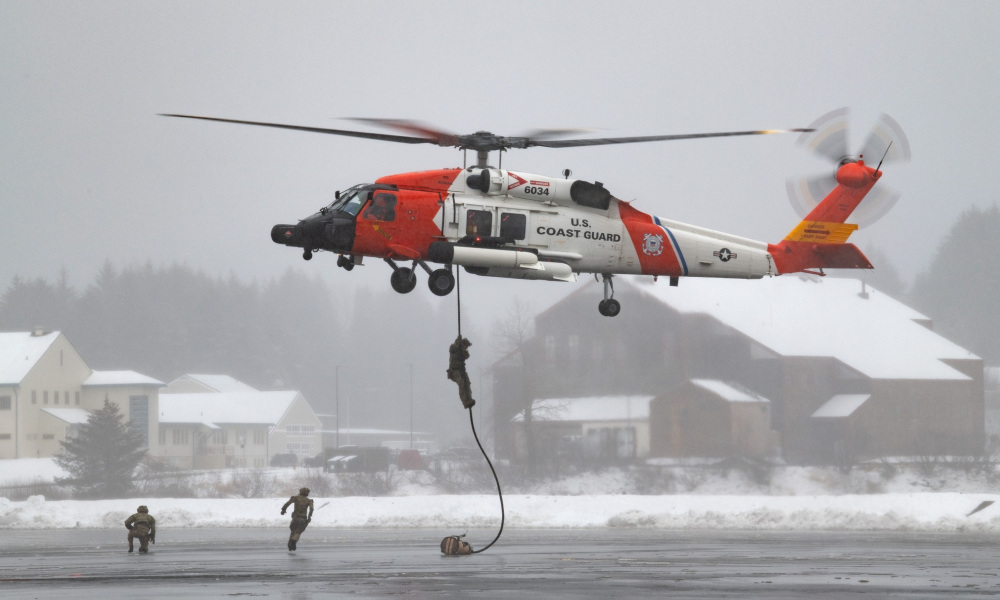
When disaster strikes or a vessel founders in remote waters, the U.S. Coast Guard (USCG) is often the only lifeline available. Rapid-response operations in these high-stakes environments depend entirely on reliable communication. In hard-to-reach locations, the ability to coordinate and ensure operational continuity determines mission success.
Without a stable link to the outside world, even the most skilled responders are left in a vacuum, limited by what they can see and hear in their immediate vicinity.
Why Communications Are Critical In Rapid Response
Response speed relies on a seamless flow of information. For the USCG, rapid response concerns how quickly those assets can be directed in response to changing intelligence.
Remote terrain and offshore environments present significant obstacles. Physical distance, mountainous coastal topography, and Earth’s curvature can all block traditional line-of-sight radio signals. In these gaps, clear coordination becomes difficult, and the risk of missed opportunities increases. Effective communication bridges these gaps, ensuring that command centers and field units act as a single, cohesive force.
Situational Awareness And Real-Time Updates
Success in the field requires eyes on the situation at all times. Teams rely on constant updates, including high-resolution mapping, weather data, and real-time operational reporting. Visibility into the theater of operations reduces delays and eliminates the confusion that naturally arises during a crisis.
When a rescue swimmer is lowered into the water or a boarding team enters a vessel, the ability to transmit data back to headquarters ensures that decision-makers have the context needed to provide support or deploy additional resources instantly.
Connectivity Options In Hard-to-Reach Environments
When terrestrial networks (such as cellular towers or landlines) are unavailable or have been destroyed by natural disasters, responders must look elsewhere. In these scenarios, the USCG utilizes a hybrid approach to maintain a link.
To ensure mission-critical data can move across the globe, the Coast Guard frequently integrates satellite internet into its communications suite. It provides an over-the-horizon capability that terrestrial systems simply cannot match. Whether it’s a temporary mobile command post in a hurricane-devastated port or a cutter patrolling the deep ocean, satellite technology ensures that high-bandwidth applications, such as video feeds and complex data transfers, remain operational regardless of local infrastructure.
Resilience Under Disruption
Reliability planning is vital because the environments in which the USCG operates are inherently hostile. Harsh weather and physical outages are constant threats. Redundancy is the cornerstone of resilience; if one system fails due to solar activity or physical damage, backup systems must kick in without delay.
Ensuring that hardware is ruggedized and that signal paths are diversified allows the mission to continue even when the environment does its best to cut the team off.
Planning For Deployment and Continuity
Effective response starts long before the alarm sounds. It involves meticulous planning for setup, support, and scalability. Response teams must be able to deploy comms-in-a-box solutions that can scale from a two-person team to a multi-agency task force.
The U.S. Coast Guard can ensure that even in the most isolated corners of the globe, help is never truly out of reach by prioritizing communication.


Illinois man charged with threatening to attack Fort Bliss personnel and families

San Diego deputy sentenced for shove that fractured detainee’s spine

Sinaloa Cartel lieutenant charged with narcoterrorism in U.S. fentanyl case

Added floors likely caused instability at Midtown Manhattan tower – WSJ
-

 Legal3 days ago
6 shot, 1 killed, at San Antonio apartment complex
-

 World1 week ago
14 killed in Saudi oil company helicopter crash
-

 US News1 week ago
Texas deputy killed by truck at drunk-driving crash scene
-

 World1 week ago
Poland breaks its national heat record amid European heatwave
-
 Politics2 days ago
U.S. condemns China’s submarine ICBM test into Pacific
-

 Legal7 days ago
7 sentenced in Texas detention center attack that wounded officer
-

 World6 days ago
10 Buddhist monks killed when 11-year-old crashes pickup truck in Thailand
-

 Legal2 days ago
Police sergeant, mother and daughter killed in Ohio shooting; suspect dead