
Reviews
Marta Ivaskevych: “Choosing to change something that has been hurting your confidence for years is an act of courage”

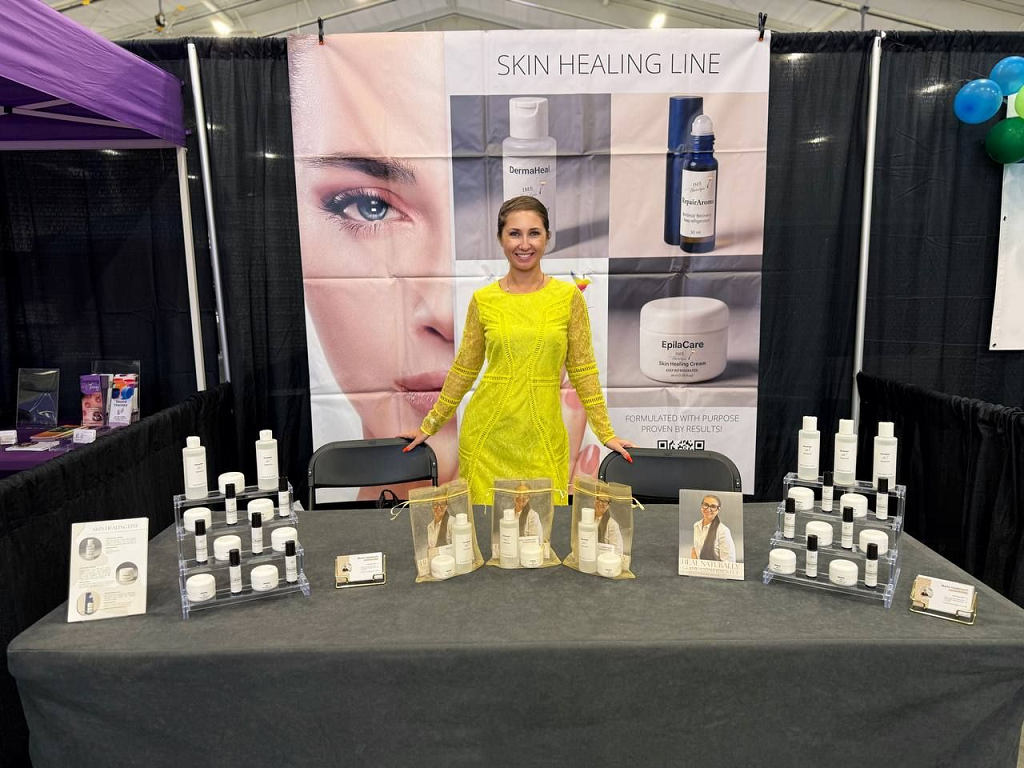
A talented Electrologist and Permanent Hair Removal Specialist on how to understand your skin, face your fears, and choose yourself.
The link between how we see ourselves and how we feel mentally is far deeper than most people realise. The study “Body Image and its Relationship with Anxiety and Depression: A Rigorous Systematic Review of Current Evidence,” conducted by researchers Manisha Wahi and Dipal Patel, reveals significant associations between body-image dissatisfaction and higher levels of anxiety and depression across ages, cultures, and life stages. At the same time, many individuals hesitate to pursue treatments that promise long-term results because they worry about pain, risks, or permanent side effects. For individuals already struggling with anxiety, Polycystic Ovary Syndrome (PCOS)-related symptoms, or deeply rooted insecurities about their appearance, fear becomes a barrier that keeps them from treatments that could genuinely change their lives.
At the Ocala Health & Wellness Expo 2025 in Florida, one of the most remarkable health events of the season, The Village Voice spoke with a professional who addresses these fears every day. Experienced Electrologist and Permanent Hair Removal Specialist, International Speaker, Inspiring Patient Advocate Awardee, and CEO of IMS Electrolysis, Marta Ivaskevych, explained what your skin is really trying to say, why fear keeps so many people from seeking help, and what actually happens inside a session room when expertise meets empathy.
Your Skin Is Talking
Modern dermatology is clear that the state of the skin barrier is not a beauty trend, but a health marker. The new scholarly work “Skin Intelligence: Advancing Cutaneous Resilience Through Biological Education, Microbial Symbiosis, and Eco-integrated Approaches,” conducted by French researchers, emphasises that the physical, chemical, immune, and microbial layers of the skin barrier function together as a living ecosystem. When that system is damaged by procedures, harsh products, or environmental stress, people are more vulnerable to irritation, infection, and long-term sensitivity. Restoring and protecting this barrier is now seen as a key therapeutic goal.
“The skin barrier responds to consistency and kindness,” Marta Ivaskevych says. “You can support it even without expensive products. Focus on three things: gentle cleansing without harsh surfactants, a simple emollient that keeps moisture in, and daily sun protection. Give your skin space to recover between treatments, avoid stacking too many active ingredients, and pay attention to how it reacts. I went through years of inflammation, mistakes, and product overload. Everything changed when I returned to calm, basic rituals. Skin gets stronger when we stop fighting it and start working with it.”
As part of her own professional journey, Marta dedicated years to developing safer post-treatment recovery methods for clients with highly reactive or hormonally sensitive skin, including patients with PCOS, diabetes, or long-term irritation. Drawing from thousands of hours working with clients and her published research, “Clinical efficacy of Electrolysis and Laser Hair Removal in PCOS patients,” Ivaskevych created an original medical-oriented healing formulation intended for use in post-treatment skin care, designed to support recovery and improve overall skin condition without aggressive synthetic components. Her goal is to offer recovery support for people who often feel overlooked by the beauty industry. However, not everyone wants multi-step products.
“An accessible alternative to specialised recovery creams is using single-ingredient oils,” Marta explains. “Shea butter works beautifully for irritated or overworked skin because it strengthens the barrier. Sea buckthorn oil is incredible for calming redness. And for acne-prone or reactive skin, a gentle calendula extract or a very light tea-tree dilution can support healing without overwhelming the skin.”

The Fear Factor
Stepping into a session room for the first time is rarely just about skin. For many people, it means walking into a stranger’s office, undressing, sometimes literally, always emotionally, and handing over control of how they will look and feel afterwards. Nearly half of potential clients hesitate to undergo minimally invasive cosmetic procedures due to insufficient information, and more than a third fear unpredictable complications, as shown in the study “Patient Awareness and Attitudes Towards Minimally Invasive Surgery” by Tauseef Kibria et al.
“When people come in for the first time, they’re often unsure about whether they can trust the person sitting across from them,” Marta tells us. “There is no need to rush into a procedure on your very first day. Start with a real consultation, look around the space, ask every question on your mind, and notice how your body feels next to the specialist. A professional will explain everything clearly, set realistic expectations, and give you time to think. Choosing the right person matters just as much as choosing the right method.”
An analysis of more than one hundred independent client reviews indicates that Marta frequently works with complex cases, including dense facial hair, ingrown hairs, PCOS-related growth, prior unsuccessful laser treatments, and hyperpigmentation. Across these cases, reported outcomes commonly include reduced regrowth rates, improved skin condition, and a gradual decrease in treatment frequency. Again and again, people mention the same things: a spotless, quiet office; a practitioner who explains every step and aftercare rule; sessions that feel surprisingly tolerable; and a sense that someone finally takes their struggle seriously. For many of them, the bigger change in how they show up in the world when going to meetings without hiding, going on dates for the first time, and using words like “life-changing,” “confidence,” and “I wish I’d found her sooner.”
“At its core, a good session should leave you feeling more connected to yourself. If you walk out feeling lighter, calmer, and more at peace with who you are, that’s the real result,” adds Marta.
Responsibility Beyond the Session
For those interested in electrolysis, it is important to understand that hair can only be permanently destroyed during its active growth phase. Dermatology research, “Integrative and Mechanistic Approach to the Hair Growth Cycle and Hair Loss,” by Nicole Natarelli et al., shows that each hair follicle cycles through three stages: anagen (active growth), catagen (transition), and telogen (rest). Only in anagen is the follicle fully attached to the papilla, the tiny structure that feeds and anchors the hair. This is the moment when energy can fully destroy the follicle.
“The challenge is that not all hairs enter anagen at the same time,” Marta explains. “Each follicle follows its own independent cycle. That’s why electrolysis requires a series of sessions, and it’s not marketing, it’s basic biology. If you miss the anagen window, some hairs will naturally grow back.”
The next step in reaching real, lasting results is what happens after the session. Most people underestimate how much the skin’s behaviour in the hours and days following electrolysis determines the outcome.
“The procedure itself is only half of the equation, the other 50% depends on how you treat your skin afterwards,” Marta says. “I always tell clients the skin is responsive. If you protect it in the first 48 hours, you’re giving the follicle a clean environment to heal. That means keeping the area calm, avoiding heat, steam, sweating, and makeup, and using only very basic soothing products.”
This is exactly why, at the Ocala Health & Wellness Expo 2025 in Florida, Marta focused on helping visitors understand why the skin reacts the way it does after electrolysis, what actually triggers irritation, and how consistent aftercare can determine as much as half of the final result. At the expo, she has also introduced the unique formulations she created specifically for people who struggle with post-procedure sensitivity. Designed to support skin recovery across a wide range of dermatological and aesthetic procedures, her approach centres on restoring the barrier and strengthening the skin’s natural defences.
“Taking care of your skin is an act of respect. And choosing to change something that has been hurting your confidence for years is an act of courage. When you take that first step, whether it’s booking a consultation, asking a question, or simply deciding you deserve to feel better, you’re already moving toward a version of yourself that feels lighter and freer. I see it every day: the moment people stop hiding and start caring for themselves with gentleness, everything begins to shift,” shares Marta Ivaskevych.


Death penalty possible in White House National Guard shooting case

5 women among 6 injured in targeted acid attack in Jersey City, New Jersey

U.S. strike kills 1 on alleged drug vessel in Eastern Pacific; 2 survive

Suspect and hostage dead after stolen vehicle pursuit in Oklahoma
-

 World1 week ago
Man seriously injured in attempted beheading in Northern Ireland
-

 World3 days ago
Tren de Aragua leader killed in U.S. strike in Venezuela
-

 World3 days ago
Woman dies after being thrown from bridge without bungee cord in Brazil
-

 Legal6 days ago
Arizona man convicted of threatening to kill Trump and Harris
-

 Legal6 days ago
Montana man charged with threatening Hawaii governor and his family
-

 Legal6 days ago
Man kills 4 family members at home in Livonia, Michigan
-

 US News1 week ago
Man attacked by shark at Florida Navy base
-

 Legal1 week ago
North Carolina teen sentenced for school shooting threats over Charlie Kirk posts