
Reviews
Why Companies Are Redesigning Offices for Sound, Not Just Space

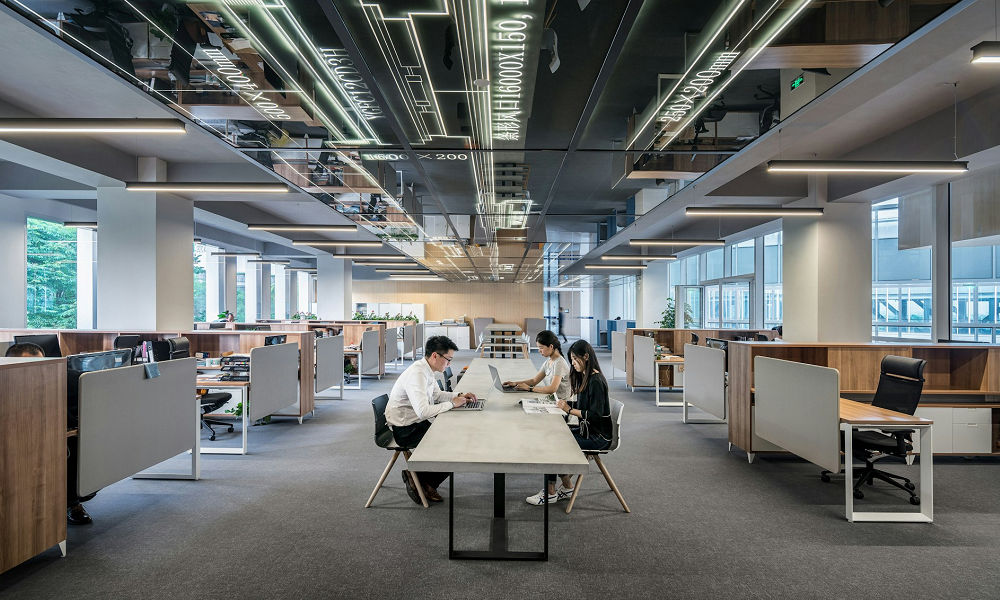
For decades, office design has been a conversation about square footage. How many desks fit on a floor, how to arrange them, and where to place the collaborative zones meant to spark innovation. Lighting got attention. Ergonomics got attention. Sound, meanwhile, was treated as something that would sort itself out. It didn’t — and now a growing number of companies are redesigning their workplaces around acoustics first.
The shift has a clear trigger: remote work reset the benchmark. Employees who spent years working from quiet home offices returned to open floors full of ringing phones, video calls, and cross-desk conversations — and found they couldn’t concentrate. Employers are responding with quiet zones, phone booths, and acoustic wall panels for offices, treating sound as infrastructure rather than an afterthought.
It’s a quiet revolution in the most literal sense, and it’s changing what a “good office” means.
The Remote Work Benchmark: Why Offices Suddenly Sound Loud
Offices didn’t get louder. Expectations changed. Before 2020, most employees had never experienced a full workweek in an environment they controlled completely — no neighboring calls, no background chatter, no colleague’s speakerphone. Years of remote work made that the norm, and the home office became the standard against which every workplace is now judged.
The return to the office turned that comparison into a daily experience. Among the most common complaints from returning employees is a simple one: it’s hard to focus. Tasks that took an hour at home stretch across an afternoon, interrupted by ambient noise.
This creates an awkward paradox for employers. The core argument for return-to-office mandates is productivity and collaboration — yet for focused work, a noisy open floor is often the least productive environment an employee has access to. When the office loses the comparison to a kitchen table, the problem isn’t the commute. It’s the sound.
The Open-Plan Problem That Was Always There
The open-plan office was sold on two promises: lower real estate costs and spontaneous collaboration. Fewer walls meant more desks per square foot, and the theory said that people who see each other talk more. The economics were real. The acoustics were an afterthought.
The daily reality of open floors is a constant layer of speech — sales calls, video meetings, hallway conversations drifting across desks. And speech is the most disruptive type of workplace noise for a simple reason: the human brain involuntarily processes words. A ventilation hum fades into the background; a colleague’s phone call gets parsed, whether you want to hear it or not. Half a conversation is even worse, since the brain keeps trying to fill in the missing side.
Modern office aesthetics amplified the problem. Glass partitions, exposed concrete, high ceilings, and minimalist furniture — the signature look of the contemporary workplace — are all hard, reflective surfaces. They bounce sound across the floor instead of absorbing it. Many companies unknowingly spent years building spaces that look impressive and sound exhausting.
What Sound-First Office Design Looks Like
The emerging approach treats sound the way designers treat light: as a resource to be zoned and managed. Instead of one acoustic environment for everyone, sound-first offices separate work modes. Quiet zones for concentration. Phone booths for calls. Enclosed meeting rooms for group discussions. Open areas reserved for the collaboration they were always meant to host.
Zoning alone, however, doesn’t work in a reflective space — sound travels and bleeds between areas. That’s why the foundation of an acoustic redesign is surface treatment: wall panels that absorb speech frequencies, ceiling baffles over open areas, soft flooring where possible. Wall panels typically carry the biggest share of the load, because walls are the largest untreated surfaces in a typical office and the first thing speech reflects off.
Notably, acoustic treatment has stopped looking technical. Today’s office panels come in fabric finishes, custom colors, and geometric layouts that read as interior design rather than equipment. Some companies integrate brand colors into panel arrangements, turning a functional upgrade into a visual one. The days when acoustic treatment meant gray foam are over.
The Business Case: Concentration, Privacy, Retention
The argument for acoustic investment rests on three pillars. The first is concentration: fewer interruptions mean less time lost to refocusing after each distraction, multiplied across every employee, every day. In knowledge work, attention is the raw material — and noise is a tax on it.
The second is privacy. Conversations that should stay in a room often don’t: HR discussions, salary negotiations, client calls, and legal matters can be audible through thin walls or across open floors. Acoustic treatment of meeting rooms is as much about confidentiality and professionalism as comfort — clients notice when their conversation can be heard at the next desk.
The third is retention and the credibility of return-to-office policies themselves. Companies asking employees to give up a quiet home setup are, in effect, competing with that setup. An office where focused work is genuinely possible is the strongest RTO argument an employer can make — and one of the few that doesn’t rely on mandates.
Where Companies Start: Practical First Steps
Acoustic redesign doesn’t have to mean renovation. Most companies begin with an informal audit: where do employees complain about noise, where do calls happen, which rooms leak conversations, and where do people escape to when they need to think. The pattern usually points to a handful of problem zones rather than the entire floor.
Treatment then follows priority. Focus areas and meeting rooms come first — that’s where noise does the most damage. Open zones and circulation areas come later, if at all.
This is also why wall panels have become the default first step: they mount to existing walls, require no construction, and can be installed without disrupting operations. For a company that wants results this quarter rather than after a renovation cycle, panels are the fastest lever available.
Sound as Infrastructure
Square footage, light, and layout have long been the measurable parameters of a workplace. Sound is joining that list. Companies that treat acoustics as infrastructure are finding it pays off twice — in the daily output of their teams and in the strength of their case for bringing people back at all.
For organizations planning that kind of retrofit, specialized suppliers such as Sound Pro Solutions offer office-grade acoustic panels and related treatment products, making it possible to address problem zones without redesigning the entire floor. In the modern office, quiet has become a competitive feature — and, unlike most of them, one that can be installed in a day.


4 Tips for Choosing the Right Attorney for a Stress-Free Divorce

How Do Adults Choose Between Braces and Invisalign?

Why Companies Are Redesigning Offices for Sound, Not Just Space

5 Reasons Businesses Are Switching to AI Contract Lifecycle Management Software
-

 Legal5 days ago
Man shot and killed by police after pointing gun at people in Austin, Texas
-

 World4 days ago
Death toll from wildfire in southern Spain rises to 13
-

 Politics3 days ago
U.S. sanctions 10 Cuban entities over repression and regime funding
-

 Politics1 week ago
U.S. condemns China’s submarine ICBM test into Pacific
-

 World1 week ago
Ukrainian suspect in Monaco bombing found shot dead
-

 Legal1 week ago
Police sergeant, mother and daughter killed in Ohio shooting; suspect dead
-

 Legal1 week ago
San Diego deputy sentenced for shove that fractured detainee’s spine
-

 Legal1 week ago
Illinois man charged with threatening to attack Fort Bliss personnel and families