
Reviews
As Summers Get Hotter, More Americans Are Replacing Aging AC Systems

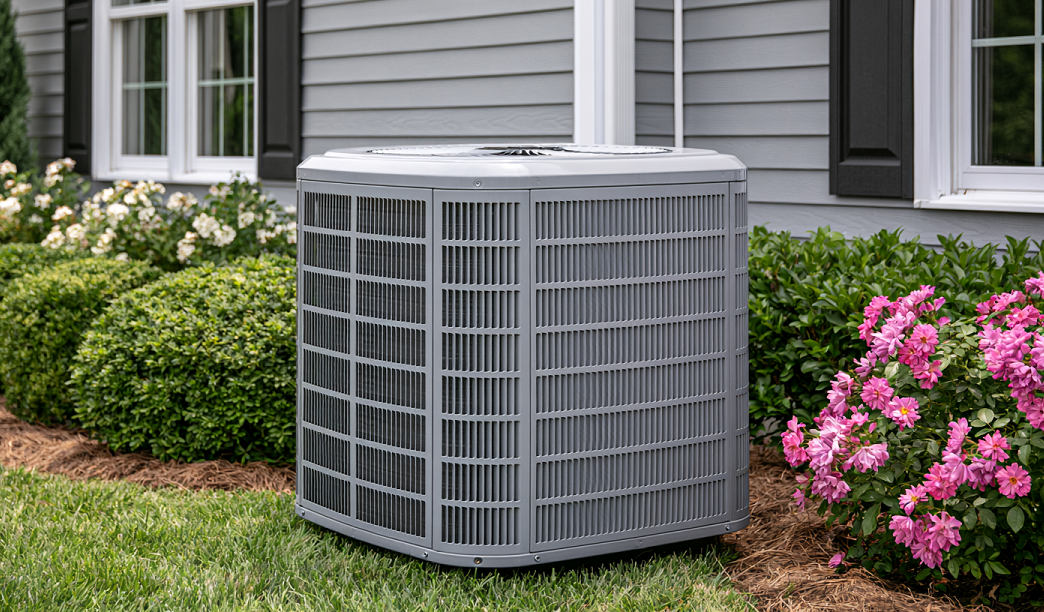
Another summer of record-breaking heat has put American air conditioning under strain — and increasingly, homeowners are responding not by repairing their old units, but by replacing them altogether. With roughly 90% of U.S. households already equipped with air conditioning, this isn’t a story about people cooling their homes for the first time. It’s about a large, aging installed base being pushed to its limits and swapped out for something newer.
The shift shows up clearly in consumer behavior. Search platforms and HVAC contractors alike report a steady climb in homeowners searching for terms like “air conditioning replacement near me,” a small but telling indicator of a national shift away from patching up old systems and toward replacing them outright. Spending on home cooling equipment is rising, and industry surveys suggest a meaningful share of homeowners are planning new installations this year.
Several forces are converging to drive the trend: hotter summers, a generation of equipment reaching the end of its life, new efficiency and refrigerant rules, and the simple economics of electricity bills. Here’s a closer look at what’s behind the numbers.
A Market Now Defined by Replacement, Not First Purchases
The starting point for understanding the trend is a single statistic: with about 90% of American homes already air-conditioned, the U.S. market has effectively matured. There aren’t many households left to reach for the first time.
What that means in practice is that today’s demand is driven overwhelmingly by replacement, efficiency upgrades, and repairs rather than new adoption. When nearly every home already has cooling, the growth comes from systems wearing out and getting upgraded. That baseline reframes almost everything else about the current wave of activity — the market isn’t expanding so much as turning over.
Hotter Summers Are Accelerating the Cycle
Climate is the most visible driver. U.S. average temperatures have risen by roughly 1.9 degrees Fahrenheit since 1895, and the increase has been steady enough to reshape how hard cooling systems have to work. Longer, more intense hot stretches mean air conditioners run more often, for more of the year, under heavier load.
That extra workload takes a toll. Systems that might once have coasted along for years now get pushed harder each summer, wearing out faster. Extreme heat events also have a way of exposing a unit’s weaknesses at the worst possible moment — a marginal or aging system that limps through a mild summer can fail outright during a heat wave, which is exactly the kind of moment that tips a homeowner from “maybe next year” into replacing on the spot.
A Generation of AC Units Is Simply Wearing Out
Beyond the weather, there’s a timing effect at work. A typical central air conditioner lasts somewhere in the range of 12 to 15 years, and a large share of the country’s installed systems are now hitting that window more or less at the same time. Equipment installed during earlier building and renovation booms is aging out in overlapping waves.
The result is demand concentrated squarely in replacement. Industry data points in the same direction: a notable portion of homeowners — around 19% by one 2026 estimate — say they’re looking to install a new heating or air conditioning system this year. When that many households are considering new equipment in a market where almost everyone already has cooling, replacement is clearly where the activity is.
New Refrigerant Rules Are Changing the Math
A significant regulatory shift is also nudging homeowners toward replacement. As of January 1, 2025, new residential air conditioning systems in the U.S. are required to use lower-impact A2L refrigerants — primarily R-454B and R-32 — as part of a broader federal effort to phase down older, higher-global-warming-potential refrigerants under the AIM Act.
The older R-410A refrigerant that many existing systems rely on is being phased out, and crucially, systems running on it can’t simply be converted to the new refrigerants. A unit built for R-410A has to be replaced, not retrofitted. Combined with the higher cost of the newer equipment, that reality changes the calculus for anyone weighing a major repair on an older system: pouring money into aging, soon-to-be-outdated equipment looks less appealing when a full replacement is on the horizon anyway.
Energy Bills and the Efficiency Payoff
Then there’s the monthly math. Air conditioning accounts for a substantial slice of residential electricity use in the U.S., and older, low-efficiency units cost more to run with every passing season. As energy prices press on household budgets, that ongoing expense becomes harder to ignore.
Newer systems, built to higher efficiency standards, can meaningfully lower operating costs over time — which reframes replacement as a long-term saving rather than just an upfront expense. Federal incentives sweeten the equation further: under the Inflation Reduction Act, qualifying households can claim tax credits and rebates worth up to $2,000 for certain high-efficiency installations. For many homeowners, the combination of lower bills and available incentives tips a borderline repair-or-replace decision toward replacement.
What the Trend Means for Homeowners
Zoom in from the national picture, and the trend becomes a personal question. If your system is 12 to 15 years old or more, runs on R-410A refrigerant, or has been quietly driving up your energy bills, you’re part of the very cohort this shift describes — the households most likely to face a replacement decision in the near future.
The practical advice tracks with the data. Rather than waiting for a system to fail during the next heat wave, when demand spikes and technicians are booked solid, homeowners are better off planning ahead: getting a written estimate, working with licensed local professionals, and weighing the efficiency and incentive math before the decision is forced on them. A replacement handled on your own schedule is almost always a better experience than an emergency one.
A Local Look at a National Shift
For all the national statistics, the trend ultimately comes down to individual decisions — made by one household and one local contractor at a time. The macro numbers are really just the sum of countless driveways and backyards where an old unit finally gives out.
In southeastern Pennsylvania, for instance, family-run companies like Region Home Services — in business since 1974 and licensed in PA and NJ — say they’re fielding more replacement inquiries as older systems age out and efficiency rules tighten. It’s a small window into a shift happening across the country, as a generation of aging air conditioners gradually gives way to more efficient ones — driven by hotter summers, changing regulations, and the steady arithmetic of an energy bill.


How Occupational Therapy Restores Independence

Why Prioritizing Customer Needs Leads to Business Success

Why Preserving Electronic Evidence Matters After a Crash

Severe Storm Seasons Are Increasing Scrutiny of Hail Damage Insurance Claims
-

 World1 day ago
Houthis claim missile and drone attacks on 2 Saudi oil tankers in Red Sea
-

 Legal1 day ago
2 Indianapolis police officers shot during disturbance call
-

 World1 day ago
Journalist shot dead in Mexico after blaming state government for death threats
-

 Legal1 day ago
Puerto Rico man charged over threats to bomb White House, attack soldiers and Jewish people
-

 Legal1 week ago
Muslim mall worker critically injured in stabbing over his religion
-

 World1 day ago
Mexican mayor shot dead inside city hall
-

 World2 days ago
Death toll from Guyana ferry disaster rises to 53
-

 US News2 days ago
All 4 U.S. soldiers killed in Jordan and Iraq identified