
Reviews
Traffic Safety and the Law: Navigating the Legal Boundaries of the Fastest Electric Bikes on Public Roads

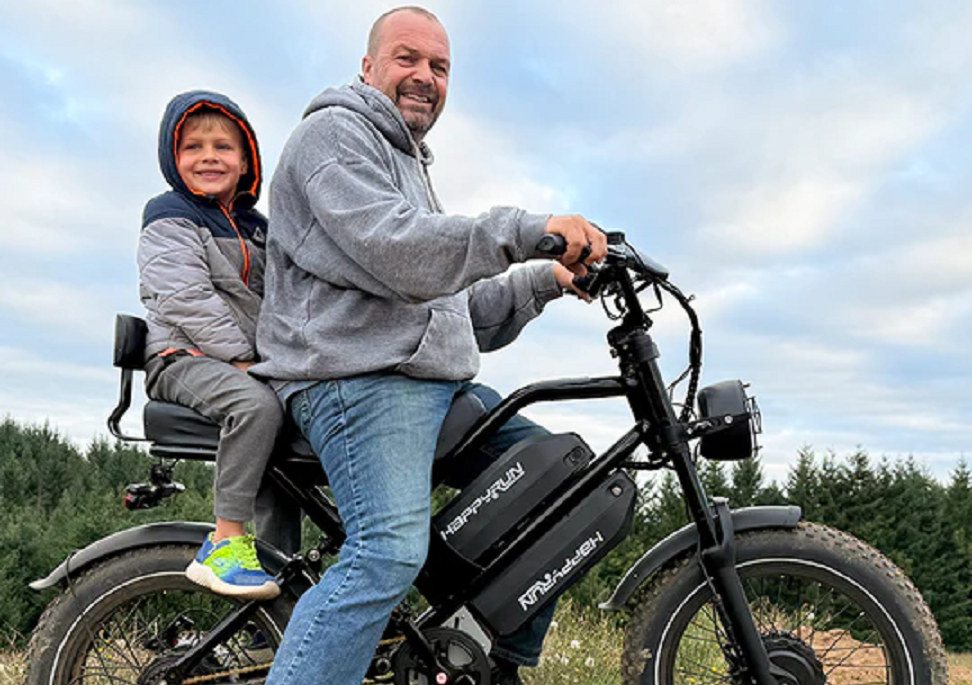
Over the past decade, electric mobility has moved from niche to mainstream. What began as a solution for short, low-speed commutes has evolved into an industry capable of producing machines that rival small motorcycles in power and acceleration. In cities around the world, electric bikes are no longer just a convenience—they are a disruptive force.
This rapid evolution has created a growing challenge for regulators, riders, and pedestrians alike. While technology accelerates, traffic laws often lag behind. As a result, high-performance electric bikes now operate in a legal gray zone, raising urgent questions about safety, classification, and responsibility on public roads.
Understanding where an electric bike fits within existing traffic law is no longer optional. It is essential.
When Does an E-Bike Stop Being a Bicycle?
Most regions attempt to regulate electric bikes through classification systems designed to balance innovation with public safety. In the United States and parts of Europe, a three-class structure is commonly used:
- Class 1: Pedal-assist only, with motor support cutting off at lower speeds.
- Class 2: Throttle-assisted, typically capped at modest speed limits.
- Class 3: Higher-speed pedal-assist models, often restricted to road use and excluded from bike lanes.
These categories were created when electric bikes were still relatively low-powered. Today, however, many riders actively seek the fastest electric bike available—machines that exceed traditional speed and wattage limits. Once those thresholds are crossed, the vehicle may no longer be legally defined as a bicycle at all.
At that point, the law often treats the vehicle as a moped or motorcycle, triggering requirements such as registration, insurance, licensing, and mandatory safety equipment. The issue is not intent; it is classification. Speed and power alone can redefine how a vehicle is regulated.
Public Roads, Private Land, and Why Terrain Matters
Another layer of complexity comes from where these vehicles are used.
Many high-powered electric models are designed for rugged environments rather than urban infrastructure. The electric dirt bike for adults category, for example, emphasizes torque, suspension, and stability over bike-lane compatibility. These machines are well-suited for private property, off-road trails, or controlled environments.
Problems arise when such vehicles are brought onto sidewalks, shared paths, or urban streets without meeting road-legal standards. Pedestrians and cyclists expect certain speed differentials. When those assumptions are violated, accident risk increases sharply.
Traffic laws exist not only to protect pedestrians, but also to protect riders from operating vehicles in environments they were never designed to navigate safely.
Why Speed Changes the Safety Equation
Speed is not just about thrill; it fundamentally alters stopping distance, reaction time, and injury severity.
At higher speeds, standard bicycle components—frames, brakes, tires—may no longer provide sufficient margin for error. This is why regulators often impose stricter rules as power increases. The intent is not to restrict freedom, but to ensure that vehicles operating at traffic speeds are built to traffic-grade safety standards.
The challenge for lawmakers is that electric bikes blur these distinctions. They look like bicycles, but behave like motor vehicles. Without clear enforcement, riders may unknowingly place themselves outside the law.
A Case Study in Safety-Oriented Design: HappyRun G70 Pro
As performance increases, responsible design becomes critical. One example often cited in discussions around high-speed electric mobility is the HappyRun G70 Pro.
This machine is not a toy; it delivers 5000W of peak power from dual motors and reaches a top speed of 36 MPH. Managing this level of kinetic energy requires more than standard bicycle components.
Unlike modified bicycles pushed beyond their limits, the G70 Pro is built with motorcycle-level considerations in mind to handle its massive 48V 33Ah dual battery system and high speeds. Hydraulic braking systems provide the necessary stopping power to bring the bike to a halt safely from 36 MPH. Integrated turn signals and brake lights ensure visibility in traffic, while NFC-based security prevents unauthorized use in dense urban environments.
These features reflect an important distinction: it is generally safer to ride a purpose-built high-performance platform than to retrofit a lightweight bicycle frame for speed it was never engineered to handle. Safety, in this context, is not about aesthetics—it is about engineering intent matching raw power.
Licensing, Insurance, and the Grey Areas in Between
One of the most common sources of confusion for riders is what to do when local laws are unclear.
In many regions, enforcement varies by municipality. A vehicle that attracts no attention in one city may be fined or confiscated in another. This inconsistency places responsibility squarely on the rider. Best practices increasingly recommended by safety advocates include:
- Wearing motorcycle-grade helmets rather than standard cycling helmets.
- Carrying liability insurance when operating high-speed electric vehicles.
- Avoiding sidewalks and shared pedestrian paths.
- Treating high-powered electric bikes as traffic vehicles, not bicycles.
In countries with stricter enforcement cultures—such as Japan and parts of Europe—authorities are already tightening oversight. Riders who fail to adapt risk penalties and, more importantly, preventable injuries.
Why Regulation Is Catching Up
The tightening of regulations should not be viewed as hostility toward electric mobility. On the contrary, it reflects recognition of its permanence.
As electric bikes become faster and more capable, lawmakers are compelled to integrate them into existing traffic frameworks. Clear rules benefit everyone: riders gain legal certainty, pedestrians gain protection, and cities gain safer streets.
The long-term success of electric mobility depends on this balance.
Conclusion: Speed Demands Responsibility
Electric bikes represent one of the most exciting shifts in personal transportation in decades. They offer efficiency, accessibility, and freedom unmatched by traditional vehicles. But with increased capability comes increased responsibility.
Riders who pursue performance must also pursue compliance. Understanding where a vehicle sits within the law is not about limiting enjoyment—it is about ensuring that innovation and public safety evolve together.
As technology continues to advance, the future of e-mobility will belong to those who respect both the road and the rules that govern it.


Officer, bystander injured in Baltimore County shooting

5 stabbed at New York’s Penn Station; suspect arrested

Major 7.8 earthquake strikes Philippines, tsunami threat issued

2 killed after U.S.-registered private jet crashes in Dominican Republic
-

 World1 week ago
Dutch police review arrest after pregnant woman thrown to ground in viral video
-

 World1 week ago
U.S. citizen killed in shootout near Cabo tourist area in Mexico
-

 US News1 week ago
3 Latvian climbers killed in fall on Denali in Alaska; others injured
-
 Legal1 week ago
2 officers, police K-9 injured in Virginia shooting
-

 US News1 week ago
United flight turns around over Atlantic after Bluetooth device named BOMB
-
 Legal6 days ago
3 killed, officer wounded in shooting in Sandy, Oregon
-

 Legal6 days ago
1 killed, 1 seriously injured in shooting near clinic in Saskatchewan, Canada
-

 Legal4 days ago
Mississippi deputy shot during standoff in Simpson County