
Reviews
The Quiet Boom in Direct to Consumer Caskets Is Reshaping a $20 Billion Industry

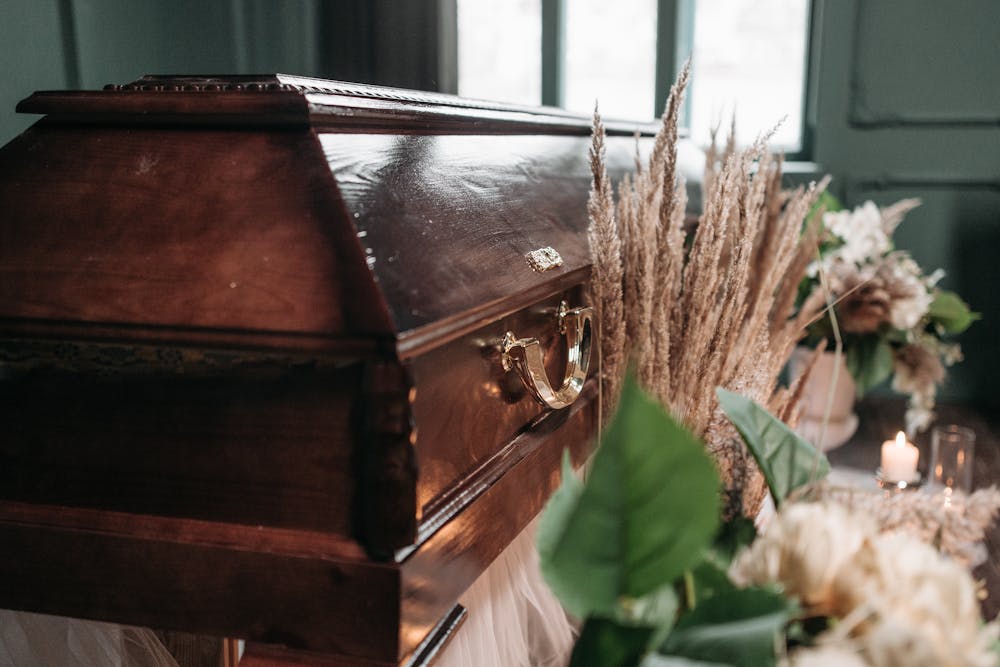
A Federal Trade Commission rule that most Americans have never heard of has, over the past five years, quietly transformed one of the country’s most consolidated and least transparent consumer categories: the American funeral.
The FTC’s Funeral Rule has been law since 1984. It gives consumers the right to buy a casket from any source, not just from the funeral home handling the service, with no penalty, no surcharge, and no restriction. For four decades that right was mostly theoretical. After e-commerce matured and the 2020 pandemic pushed almost every purchasing category online, it is becoming operational. The result is a fast growing direct to consumer segment that is changing both what funerals cost and how families prepare for them.
The numbers that started the shift
The average American funeral with burial now costs between $8,000 and $10,000, according to the National Funeral Directors Association. Historically, roughly 30 percent of that total is the casket itself. At a traditional funeral home a mid tier casket retails for $2,800 to $3,500. The same model, purchased online and delivered directly to the funeral home, can cost $900 to $1,400.
Savings of that size have pulled consumers online. Searches for “coffins for sale” and related terms have climbed year over year since 2021. At least a dozen direct to consumer brands now compete in the U.S. market. Unlike the traditional funeral home, these sellers publish transparent pricing, list full product specifications, and ship nationwide on 24 to 72 hour windows.
Why it took so long
The reason DTC caskets did not take off sooner is not regulatory. It is logistical and emotional. Buying a coffin is typically done within 48 hours of a death, often by someone in acute grief, and for most of American history it involved driving to a funeral home and picking from whatever was on display. The online model needed three things to come together before it could work: reliable overnight shipping, funeral homes that were both willing and legally required to accept outside caskets, and a level of consumer comfort with online buying that simply did not exist before the 2010s.
Younger consumers are driving most of the growth. Millennials, now the generation most often responsible for arranging a parent’s funeral, have been more willing than earlier cohorts to research, compare prices, and buy online even under emotional pressure. A 2024 Funeral Service Foundation survey found that 41 percent of millennials said they would consider buying a casket online. Only 12 percent of Americans over 65 said the same.
How funeral homes are adjusting
The response from the traditional industry has been mixed. The two publicly traded funeral chains that together own roughly 15 percent of U.S. funeral homes have broadly accepted the shift. Some have added handling fees that the FTC Rule specifically prohibits, and those fees have drawn regulatory scrutiny in multiple states. Independent funeral homes, which make up the bulk of the industry, have generally been quicker to adapt. Many publish DTC friendly policies on their websites, and a growing share have moved to openly listed General Price Lists in anticipation of FTC Rule updates expected in 2026.
Industry analysts estimate that the DTC segment, while still a minority of overall casket sales, is growing 15 to 25 percent annually. That is faster than any other segment of the death care market. If the trajectory holds, roughly one in four American caskets will be purchased online by 2030.
What families can actually do
For anyone navigating a funeral decision right now, the steps are not complicated:
- Request the General Price List. The FTC requires every funeral home to give you one if you ask.
- Understand that third party caskets must be accepted without a surcharge.
- If you are pre-planning, order early. Overnight delivery is available but costs more.
- Consider pre-funding through burial insurance to avoid last minute financial strain.
The DTC shift will not eliminate the traditional funeral home. Most families still want a physical venue, a director who can coordinate the service, and the dignity of a well run ceremony. What is changing is that families are separating the ceremony from the product. They buy the casket online. They buy the insurance ahead of time. They hire the service locally. For an industry built on bundling all three into a single premium, the unbundling is going to be the story of the next decade.


Actor James Handy killed by girlfriend’s son at Los Angeles home

Massive explosion reported at suspected fuel theft site in Mexico

U.S. sanctions Cuban President Miguel Díaz-Canel

Amazon employee shot and killed in fulfillment center garage near Chicago
-

 World1 week ago
Dutch police review arrest after pregnant woman thrown to ground in viral video
-

 World1 week ago
2 injured after Russian drone hits apartment building in Romania
-

 World7 days ago
U.S. citizen killed in shootout near Cabo tourist area in Mexico
-

 US News1 week ago
3 Latvian climbers killed in fall on Denali in Alaska; others injured
-
 Legal7 days ago
2 officers, police K-9 injured in Virginia shooting
-
 US News1 week ago
United flight turns around over Atlantic after Bluetooth device named BOMB
-
 Legal6 days ago
3 killed, officer wounded in shooting in Sandy, Oregon
-

 Legal6 days ago
1 killed, 1 seriously injured in shooting near clinic in Saskatchewan, Canada