
Reviews
An Auto Accident Claim Looks Straightforward Until You’re the One Trying to Prove Fault, Negotiate with Adjusters, and Recover at the Same Time

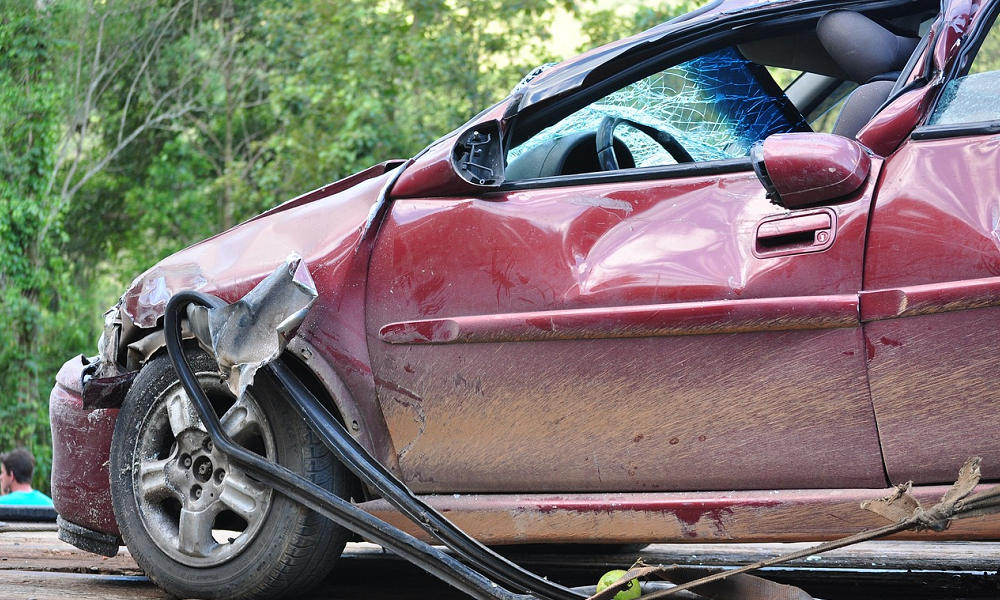
From the outside, a car accident claim appears to follow a simple sequence: the accident happens, you file a claim, the insurance company pays, you move on. People who have been through the process know that the reality involves disputed liability, adjuster tactics, gaps in medical documentation, policy limit issues, and a timeline that stretches far beyond what anyone anticipated.
A personal injury law firm’s role in an auto accident case is not simply to handle paperwork. It is to build the evidentiary and legal foundation of your claim from the ground up — establishing fault, documenting damages, engaging with the insurance carrier on terms that serve your interests rather than theirs, and sustaining the case through whatever process is necessary to reach an outcome that reflects what you are actually owed.
This piece explains how that process works — from the initial case assessment through the resolution — and what factors determine whether the result is a fair one.
The Case Assessment: What an Attorney Does Before Anything Else
The first thing a competent personal injury firm does after taking on an auto accident case is assess what they actually have. That assessment determines the strategy for everything that follows.
Liability analysis comes first. Who caused the accident, and how well can that be established? In clear-cut cases — a rear-end collision at a red light, a driver who ran a stop sign, a T-bone from someone who crossed a centerline — liability is typically not contested. In more complex scenarios — multi-vehicle accidents, accidents in intersections without clear traffic control, accidents where both drivers disagree about the sequence of events — establishing liability requires investigation that goes beyond the police report.
Damages analysis follows. What are the full economic and non-economic damages, and how completely can they be documented? For cases with minor injuries and clear recovery, this calculation is relatively straightforward. For cases involving serious or permanent injuries, future medical needs, or significant lost earning capacity, the damages calculation requires expert testimony and a medical picture that may not be complete for months after the accident.
Insurance coverage analysis runs alongside both. What policies are available? What are the limits? Is underinsured motorist coverage relevant because the at-fault driver’s limits are insufficient to cover the damages? Is the at-fault driver’s insurer known to litigate aggressively, or to negotiate in good faith? These factors affect the strategic approach to the case from the outset.
Who Is Liable in a Multi-Vehicle Accident
Multi-vehicle accidents — those involving three or more cars, or a chain-reaction sequence of collisions — present liability questions that single-vehicle accident cases do not. When four cars are damaged in a highway pile-up, determining whose negligence was the proximate cause of each injury requires analysis of the sequence of events that most accident reports only partially document.
Florida follows a modified comparative fault system. This means that liability can be apportioned among multiple parties, and each party pays their proportional share of the damages. A defendant who is thirty percent at fault for an accident pays thirty percent of the damages. If you, as the injured party, are found to bear some percentage of fault — for following too closely, for being in a blind spot, for any number of other factors — your recovery is reduced by that percentage. If your fault exceeds fifty percent, you recover nothing.
In multi-vehicle cases, each driver’s insurer is initially trying to shift fault onto one of the other drivers. This is a dynamic that benefits insurance companies at the expense of injured parties, because the apportionment dispute can delay resolution and reduce offers from each carrier independently. An attorney representing the injured party in a multi-vehicle case needs to build a complete accident reconstruction before entering negotiations, rather than accepting any insurer’s preliminary liability position.
Expert accident reconstruction is particularly valuable in these cases. A qualified reconstructionist can analyze vehicle damage, skid marks, GPS and telematics data from the vehicles involved, and physical evidence from the scene to establish the sequence of events with a level of precision that eyewitness accounts and police reports rarely achieve. That precision directly affects how fault is apportioned and, therefore, what each insurer owes.
How to Deal with the Other Driver’s Insurance Company
The other driver’s insurance company is an adverse party. That is not a characterization. It is their legal position. Their adjuster’s job is to evaluate your claim and resolve it at the lowest defensible figure. Understanding this changes how every interaction with them should be approached.
The first contact from the other driver’s insurer — which often comes within 24 to 48 hours of the accident — is typically a request for a recorded statement about what happened. This request is not an opportunity to explain your side of the story. It is a structured information-gathering process designed to produce a record that the insurer can use to contest liability or reduce the value of the claim. You are under no legal obligation to provide a recorded statement to the other party’s carrier, and doing so without legal counsel is almost always a mistake.
Requests for medical records or medical authorization forms from the other driver’s insurer should similarly be reviewed by an attorney before you respond. A broad medical authorization can give the insurer access to your entire medical history, including records from years before the accident that they will use to argue your injuries were pre-existing.
All communications from the other driver’s insurer should be forwarded to your attorney without response once you have representation. The attorney handles the communication, controls the information flow, and prevents the accumulation of statements or concessions that would reduce your recovery. The insurer may push back, but they cannot legally require you to communicate with them directly once you have told them you are represented.
Why Medical Documentation Is Critical in Auto Accident Claims
The connection between what your medical records say and what your case is worth is more direct than most injury victims realize.
Medical records do not just establish that you were injured. They establish the causal link between the accident and the injury — which the insurer will dispute if the records are ambiguous, delayed, or incomplete. A record from the emergency room the day of the accident that documents the mechanism of injury (a rear-end collision at highway speed), the symptoms presented (neck pain, back pain, restricted range of motion), and the physician’s clinical impression is a record that ties the injury to the accident in a way that is very difficult to challenge.
Records that document functional limitations — what you cannot do, not just what the diagnosis is — are the records that support non-economic damages claims. A physician who notes that a patient cannot sit for more than twenty minutes, cannot lift objects over ten pounds, and has discontinued recreational activities they previously engaged in weekly is building a record that supports both a lost enjoyment of life claim and a permanent impairment claim if the limitation persists.
Gaps in treatment are one of the most consistently damaging evidentiary problems in auto accident cases. A gap of several weeks between medical appointments — even one caused by scheduling difficulties, insurance delays, or the client’s own hesitation — will be used by the opposing insurer to argue that the injuries were not as serious as claimed. If you had a legitimate reason for a gap in treatment, document it. If the gap was caused by your insurer’s delay in authorizing treatment, that documentation becomes part of the bad faith record if applicable.
What Compensation Categories Exist After a Car Crash
The full scope of compensation available after a serious auto accident is broader than most people realize when they first engage with the claims process.
Medical expenses — past and future — are the foundation. Past medical expenses are the total of everything billed by treating providers from the date of injury through the settlement or verdict date. Future medical expenses are a projection, supported by treating physician testimony or a life care planner’s analysis, of the costs the injured party will continue to incur going forward. For serious injuries involving ongoing treatment, surgery that has not yet been performed, or permanent conditions requiring long-term management, future medical costs often represent the largest component of the economic damages claim.
Lost wages cover income lost from the date of injury through the resolution date. Lost earning capacity is a separate and often larger category: it addresses the reduction in the injured party’s ability to earn income over their remaining working life as a result of the injury. Calculating lost earning capacity requires vocational expert testimony and often economic expert testimony to project the impact forward to present value.
Property damage covers the cost of repairing or replacing your vehicle and any personal property damaged in the accident. In most cases, this is handled relatively straightforwardly through the property damage portion of the claim — but disputes about vehicle valuation, total loss calculations, and the cost of a replacement vehicle during repairs are common and worth addressing carefully.
Pain and suffering damages — formally called non-economic damages — compensate for the physical pain, emotional distress, loss of enjoyment of life, and psychological impact of the injury. These are the most subjective category and the ones most consistently undervalued in early settlement offers. They are also, for seriously injured people with long recovery timelines, often the largest component of what a fully litigated case is worth.
Building the Case: What the Process Looks Like Over Time
A well-built auto accident case progresses through distinct phases, each of which contributes to the final result.
During the active treatment phase, the attorney focuses on evidence preservation, initial investigation, and ensuring the medical record is being built appropriately. The demand letter is not sent during this phase. Sending a demand before the injured party has reached maximum medical improvement — the point at which their condition has stabilized and future treatment needs can be projected — means sending a demand that undervalues future damages.
After maximum medical improvement, the attorney compiles the full damages picture, retains any necessary experts, and drafts the demand package. The demand package sent to the insurer includes the demand letter, the supporting medical records, bills, wage loss documentation, and any expert reports relevant to damages. It presents the full case in a form designed to be evaluated seriously, not countered with a low figure and a hope that the claimant will accept it.
Negotiation follows. In cases where the insurer responds substantively, the gap between the demand and the offer narrows through exchanges of documentation and legal argument. Cases that cannot be resolved through pre-suit negotiation proceed to litigation — filing a lawsuit, conducting discovery, and if no settlement is reached, going to trial.
For auto accident victims in the Boca Raton area, working with an auto accident law firm boca raton that builds cases with the same rigor and evidentiary standard as it would apply in a courtroom — regardless of whether the case ultimately settles — produces consistently better outcomes than firms that treat settlement as the default endpoint rather than one possible resolution of a process that starts with building a case that holds up under scrutiny.
The Variable That Controls Everything Else
In an auto accident claim, the quality of the evidentiary record is the variable that controls everything else. The strength of the liability case determines whether the insurer contests fault or concedes it. The quality of the medical record determines how much of the non-economic damages claim they contest. The completeness of the economic damages documentation determines how much leverage the attorney has in negotiation.
All of that is built in the early phases of the case, before the first demand letter is sent. The law firm you hire determines how that building process goes — what evidence is gathered, what expert testimony is retained, what medical documentation is developed, how the insurance carrier’s conduct is documented for potential bad faith purposes. The case that reaches the negotiation table is the product of that work, and its quality determines the range of outcomes available.
An auto accident case looks straightforward from the outside. From inside the process, what it looks like is a sustained effort to build an accurate picture of what happened and what it cost — and then to present that picture to a party whose financial interest lies in minimizing it. The firm you hire is the variable that determines how that effort goes.


Actor James Handy killed by girlfriend’s son at Los Angeles home

Massive explosion reported at suspected fuel theft site in Mexico

U.S. sanctions Cuban President Miguel Díaz-Canel

Amazon employee shot and killed in fulfillment center garage near Chicago
-

 World1 week ago
Dutch police review arrest after pregnant woman thrown to ground in viral video
-

 World1 week ago
2 injured after Russian drone hits apartment building in Romania
-

 World7 days ago
U.S. citizen killed in shootout near Cabo tourist area in Mexico
-

 US News1 week ago
3 Latvian climbers killed in fall on Denali in Alaska; others injured
-
 Legal7 days ago
2 officers, police K-9 injured in Virginia shooting
-
 US News1 week ago
United flight turns around over Atlantic after Bluetooth device named BOMB
-
 Legal6 days ago
3 killed, officer wounded in shooting in Sandy, Oregon
-
 Legal6 days ago
1 killed, 1 seriously injured in shooting near clinic in Saskatchewan, Canada