
Reviews
Why Governments and Corporations Are Investing in Secure Digital Ledgers

Governments and large corporations are shifting budget and staff toward systems built to record actions in a way that is difficult to alter without leaving evidence. The goal is cleaner compliance and fewer disputes between parties who don’t share a single database.
A secure ledger can be a permissioned blockchain, a distributed ledger, an append-only audit log, or even a conventional database paired with cryptographic proofs. What matters is the outcome: a record that can be verified later, plus controls that show who did what and when.
Below is why investment is accelerating and what decision-makers should watch for when scanning third-party signals like reviews of DesignRush to discover U.S.‑based partners capable of designing, integrating, and hardening secure ledger systems.
What a secure digital ledger means in practice
A ledger is a record of events: approvals, transfers, inventory movements, entitlement changes, document signatures, and a secure one means tampering is difficult or detectable. Most designs link records together (for example, with hashes) so that altering one entry breaks the chain.
Identity, access controls, logging, and audit trails are built in from day one, and the model is permissioned. The idea is to make the record defensible while keeping sensitive information protected.
Why governments are investing
Public institutions run on approvals, registries, and evidence. Those are also the areas where fragmented systems create risk. Records can be incomplete, duplicated, or hard to reconcile after the fact.
A ledger approach can reduce manual reconciliation between agencies and standardize how decisions are recorded, as well as make it harder to “fix” a record quietly after scrutiny begins.
Most government use cases do not require a public blockchain. Many are internal, tracking changes to registries, logging access to sensitive datasets, or proving that a document existed at a specific time.
Why corporations are investing
Corporate drivers are similar but more transactional. In supply chains, finance, and insurance, multiple organizations often maintain their own records for the same process.
When records don’t match, the cost shows up as delays, write-offs, disputes, and hours of manual work. A shared, verifiable event log moves that effort upstream, where it can be automated and monitored.
This becomes more important as workflows become software-driven. When systems trigger actions like releasing a shipment or approving a refund, the record has to be machine-readable and defensible in an audit.
The payments pressure point
The clearest pain is cross-border payments, where fees and limited tracking are still common for end users. The World Bank remittance price tracker puts the global average cost of sending money at 6.49% of the amount sent, which goes to show that “digital” does not automatically mean “efficient.”
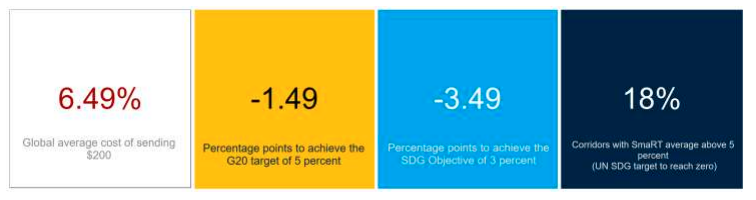
Ledger-based settlement experiments aim to reduce duplicated checks and provide shared visibility into status changes. This shows up as fewer steps where different intermediaries have to agree on what happened.
Security economics and evidence
A second driver is the price of uncertainty during incidents. If teams can’t prove what happened regulators lose patience and customers lose trust. That is why cybersecurity teams increasingly push for immutable logging and stronger identity controls that make wrongdoing harder and forensics faster.
IBM’s 2025 breach research with the Ponemon Institute puts the global average cost of a data breach at about $4.4 million. That is large enough to turn auditability into a budget line.
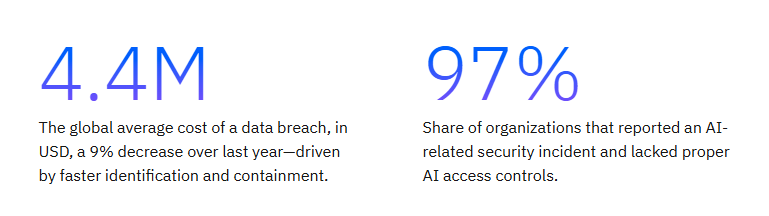
For many organizations, the ledger is about shortening the time between something going wrong and being able to show what was changed, by whom, and when.
Adoption is moving from pilots to production
Investment is also rising because more projects are now live. In a 2025 market survey referenced in a Broadridge Financial Solutions DLT study, over one-third (36%) of respondents report active initiatives, reflecting a shift toward production systems in areas like tokenization, settlement, and secure transaction processing.
That shift changes procurement. Instead of asking whether the technology works in theory, buyers are asking how upgrades are handled and what happens when a participant leaves the network.
It also forces clarity on standards. Interoperability and data formats matter more when the ledger is not a lab demo but part of daily operations, and when regulators expect consistent evidence across vendors and participants.
Where secure ledgers tend to work best
The strongest use cases share a few traits.
They involve multiple parties that need a synchronized record but do not fully trust each other, and the cost of reconciliation is high relative to the cost of automation.
That points to several common categories:
- Shared process logs: procurement approvals, claims processing, or multi-party servicing workflows
- Provenance tracking: high-value goods, regulated materials, or maintenance histories
- Capital markets workflows: post-trade reporting, collateral movements, and tokenized issuance rails
- Internal controls: privileged access changes, entitlement updates, and high-risk operational actions
In each case, the ledger is most valuable when it reduces arguments about the record itself. If everyone can verify the same history, disputes can quickly move to dealing with policy and exceptions.
The trade-offs decision-makers underestimate
Secure ledgers do not remove complexity. They just concentrate it in architecture and governance decisions.
- Privacy: Writing sensitive data directly to a shared log can create new exposure. Many designs store sensitive payloads off-ledger and keep only hashes, pointers, and access rules on the ledger.
- Governance: Someone must define who can write, who can read, how upgrades happen, and how disputes are resolved.
- Data quality: A ledger can prove that a record was not altered after it was written. It cannot prove the record was correct at the moment it was entered.
There is also the temptation to over-engineer. If a workflow has one owner and a simple audit requirement, a well-designed database and logging system may be the right answer.
Bottom line
Governments and corporations are investing in secure digital ledgers for the same reason they once invested in databases and later in cloud platforms: the old way of keeping records is too fragmented and too hard to defend under scrutiny.
When the record is reliable and verifiable, processes can be automated with confidence. When it isn’t, organizations pay for it in disputes and avoidable risk.


Major 7.8 earthquake strikes Philippines, tsunami threat issued

2 killed after U.S.-registered private jet crashes in Dominican Republic

9 injured in Kansas City shooting

Actor James Handy killed by girlfriend’s son at Los Angeles home
-

 World1 week ago
Dutch police review arrest after pregnant woman thrown to ground in viral video
-

 World1 week ago
U.S. citizen killed in shootout near Cabo tourist area in Mexico
-

 US News1 week ago
3 Latvian climbers killed in fall on Denali in Alaska; others injured
-

 Legal1 week ago
2 officers, police K-9 injured in Virginia shooting
-

 US News1 week ago
United flight turns around over Atlantic after Bluetooth device named BOMB
-

 Legal6 days ago
3 killed, officer wounded in shooting in Sandy, Oregon
-

 Legal6 days ago
1 killed, 1 seriously injured in shooting near clinic in Saskatchewan, Canada
-

 Legal4 days ago
Mississippi deputy shot during standoff in Simpson County