
Reviews
Three Areas of Law, One Common Need: Understanding Your Legal Options in Pittsburgh for Business, Property, and Medical Claims


Business disputes, property injuries, and surgical errors are three very different legal situations — but they share a common feature: each involves a party whose conduct fell short of a legal standard, and each gives the affected person or business the right to seek a remedy through the legal system. Pennsylvania law governs all three, and while the specific rules, burdens of proof, and procedural requirements differ across these areas, the underlying need for competent legal representation is the same. Understanding how each area works helps individuals and business owners in Pittsburgh recognize when they have a viable legal claim and what pursuing it involves.
Business Law in Pittsburgh: Prevention, Disputes, and Protection
Business legal matters in Pennsylvania fall into two broad categories: transactional work, which involves drafting and reviewing contracts, forming entities, and structuring agreements to protect the business before problems arise, and litigation, which involves resolving disputes when those protections fail or were never put in place. Both are important, and the value of transactional legal work is often most apparent when a contract dispute arises and one party has documentation that clearly establishes the agreed terms while the other does not.
A business attorney pittsburgh advises businesses across the full range of legal matters — from entity formation and operating agreements at the startup stage, to contract negotiation and review as the business grows, to dispute resolution and litigation when a vendor, partner, customer, or former employee creates a legal conflict that cannot be resolved informally.
Business legal matters that commonly require attorney involvement:
- Entity formation — LLC, corporation, partnership, and the documentation that governs each
- Operating agreements and shareholder agreements — defining ownership, voting rights, and buyout terms
- Contract drafting and review — vendor agreements, client contracts, non-disclosure agreements, and employment terms
- Business disputes — breach of contract, partnership conflicts, and non-compete enforcement
- Commercial real estate transactions — purchase agreements, leases, and title matters
- Business acquisitions and sales — due diligence, purchase agreements, and transition planning
- Employment disputes — wrongful termination claims, wage disputes, and discrimination allegations
One of the most consistent findings in business legal practice is that disputes that reach litigation almost always involve documents that were never drafted, reviewed, or updated by an attorney. A contract that is ambiguous about payment terms, a partnership agreement that does not address what happens when owners disagree, or an employment arrangement with no written terms — these are the gaps that generate the most expensive legal disputes. Transactional legal work is fundamentally about closing those gaps before they become problems.
Slip and Fall Claims in Pennsylvania: Premises Liability and What It Requires
Pennsylvania property owners have a legal duty to maintain their premises in a reasonably safe condition and to warn lawful visitors of known hazards that are not readily apparent. When that duty is breached — through a wet floor left unaddressed, a broken step not repaired, inadequate lighting in a stairwell, or a parking lot with uneven pavement — and a visitor is injured as a result, the property owner may be held liable for the resulting damages.
A slip and fall attorney pittsburgh evaluates whether the property owner knew or reasonably should have known about the dangerous condition, whether the owner failed to take appropriate corrective action, and whether Pennsylvania’s comparative negligence rule — which reduces recovery proportionally when the injured person bears some fault — affects the value of the claim.
What a premises liability claim in Pennsylvania requires:
- A dangerous condition existed on the property at the time of the accident
- The property owner knew or should have known about the condition through reasonable inspection
- The owner failed to repair the hazard or provide adequate warning within a reasonable time
- The dangerous condition caused the plaintiff’s fall and resulting injuries
- The injuries produced documented damages — medical costs, lost wages, and non-economic losses
Pennsylvania follows a modified comparative negligence rule — an injured person can recover as long as their share of fault is less than fifty-one percent, but their recovery is reduced proportionally by their own percentage of fault. Defendants and their insurers routinely argue that the injured person was inattentive or failed to avoid an obvious hazard. Building a premises liability case that addresses those arguments requires evidence gathered close to the time of the accident — photographs, incident reports, maintenance logs, and witness accounts that establish what the property owner knew and when.
Evidence that matters most in a slip and fall case:
- Photographs of the hazardous condition taken as soon as possible after the accident
- The property’s maintenance and inspection records showing when the hazard was first present
- Incident reports filed at the scene, if any
- Surveillance footage from the property — requested before it is overwritten
- Witness statements from anyone who observed the condition or the fall
- Medical records documenting the injuries and their connection to the accident
Surgical Errors: When a Medical Procedure Causes New Harm
Surgery carries inherent risks, and not every adverse outcome constitutes malpractice. The legal standard is not perfection — it is whether the surgeon and surgical team met the accepted standard of care for the procedure involved. When a surgical error occurs because a provider departed from that standard, and the departure caused harm that would not otherwise have occurred, the patient has a viable medical malpractice claim.
A pittsburgh surgical error attorney works with medical experts to evaluate whether the care provided during and after the surgery met the applicable standard, identifies the specific departure that caused the injury, and builds a case that documents both the liability and the full scope of the patient’s damages — including the cost of corrective treatment, additional recovery time, permanent complications, and non-economic losses.
Surgical errors that commonly support a malpractice claim:
- Wrong-site surgery — operating on the incorrect body part, limb, or organ
- Wrong patient — performing a procedure on a patient for whom it was not intended
- Retained surgical instruments — leaving sponges, clamps, or other objects inside the patient
- Nerve damage caused by improper technique during the procedure
- Anesthesia errors — incorrect dosing, failure to monitor, or inadequate response to complications
- Failure to control bleeding or recognize intraoperative complications in time
- Post-operative errors — inadequate monitoring, failure to diagnose complications, or premature discharge
Pennsylvania requires that medical malpractice complaints be accompanied by a certificate of merit — a statement from an attorney certifying that a licensed professional has reviewed the case and concluded that there is a reasonable probability that the care fell below the applicable standard. This requirement is procedural but significant: it must be filed within sixty days of the complaint, and failure to file it results in dismissal. The two-year statute of limitations on medical malpractice claims in Pennsylvania begins on the date of the injury or, in cases involving foreign objects or fraudulent concealment, when the patient discovered or should have discovered the harm.
What These Three Case Types Have in Common
Business disputes, slip and fall injuries, and surgical errors each arise from a different context and follow different legal rules — but each requires the same fundamental approach. The claim must be evaluated early, before evidence is lost or deadlines expire. The legal standard applicable to the specific situation must be clearly understood. And the damages must be documented comprehensively, accounting for both immediate costs and long-term consequences, before any resolution is reached.
In each of these areas, the decisions made before formal legal proceedings begin — what documentation is preserved, what statements are made, what offers are accepted or rejected — shape what outcomes are achievable. Consulting an attorney as soon as a potential legal issue becomes apparent, rather than waiting until a dispute has escalated or a deadline is approaching, consistently produces better results than engaging legal counsel after the most important early decisions have already been made.


Three Areas of Law, One Common Need: Understanding Your Legal Options in Pittsburgh for Business, Property, and Medical Claims

Your License, Your Career: How Professional Licensing Defense Attorneys Protect What You’ve Built in Michigan

From Agreed to Disputed: How San Antonio Families Navigate Divorce and Child Relocation Under Texas Law

From Property Transactions to Probate: How Legal Representation in Arizona and Montana Covers What Families Need
-

 World2 days ago
Germany breaks national all-time heat record amid European heatwave
-

 World1 week ago
5 injured in suspected anti-Muslim attacks in Scotland’s capital
-

 Business1 week ago
Ubisoft co-founder Claude Guillemot killed in France plane crash
-

 World18 hours ago
14 killed in Saudi oil company helicopter crash
-

 US News19 hours ago
Texas deputy killed by truck at drunk-driving crash scene
-

 World19 hours ago
Poland breaks its national heat record amid European heatwave
-

 Legal5 days ago
Texas Amber Alert: 14-year-old Audrey Rich abducted in Big Springs
-
 Legal7 days ago
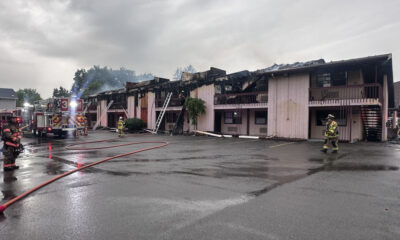
6 killed in New York motel fire; man arrested on arson charges