
Reviews
COP30 2025 and Its Impact on CSR: Adapting to New Climate Goals and Communication Challenges

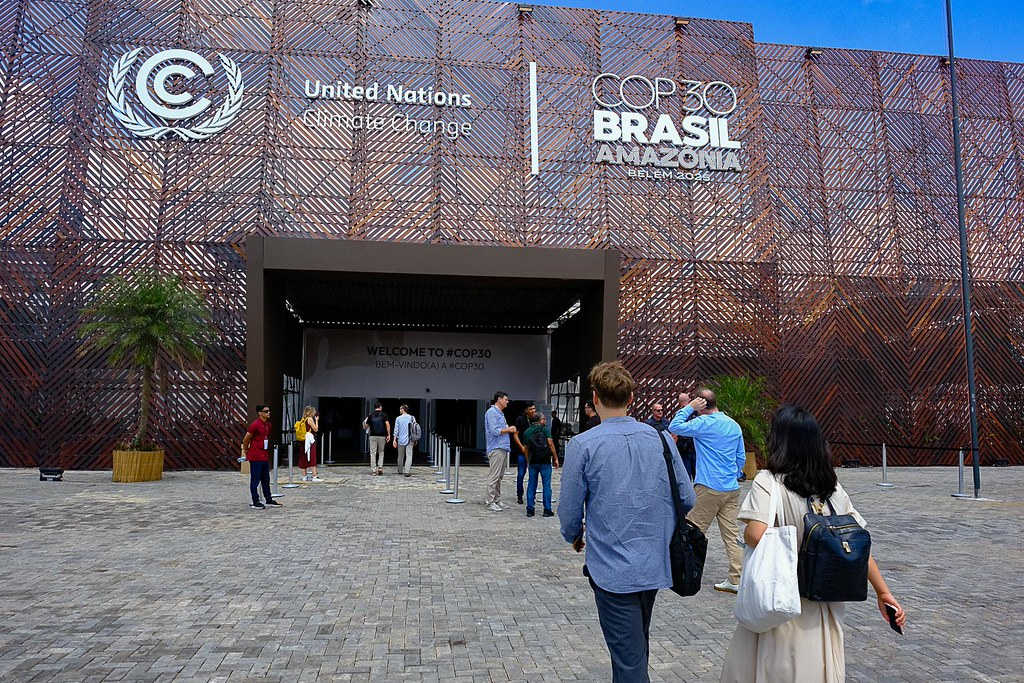
COP30 2025, hosted in Belém, Brazil, marked one of the most decisive moments for global climate governance in the past decade. As the first COP held in the Amazon, the conference combined high-stakes negotiations with unprecedented civic mobilization, highlighting the urgent need to move from commitments to implementation.
In addition to formal negotiations, Belém became the stage for the Global March of Indigenous Peoples, which brought together thousands of participants from Brazil and around the world. Their demands—territorial demarcation, protection of environmental defenders, zero deforestation, direct access to climate finance and meaningful participation in decision-making—gained significant visibility and reshaped the social and political context surrounding the conference.
For companies operating in Latin America, COP30 demonstrated that sustainability is no longer only about regulatory compliance. It requires social sensitivity, responsible communication, robust governance and alignment with the expectations of Indigenous and traditional communities. This is precisely where a specialized social impact & ESG agency becomes essential.
COP30 Agenda: What Companies Need to Know
New Global Climate Goals
COP30 concluded with a historic breakthrough: 195 Parties adopted the Belém Package, a comprehensive set of 29 decisions that established the most implementation-focused climate agenda since the Paris Agreement. This outcome transformed the earlier task-force negotiations into a concrete, consensus-based package, setting precedent for global climate policy for the decade ahead.
The Belém Package delivered progress across multiple fronts:
- Global Goal on Adaptation (GGA): Parties finalized a framework built on 59 voluntary, non-prescriptive indicators covering water, food, health, ecosystems, infrastructure, livelihoods, finance, technology and capacity-building, offering a shared basis to track adaptation progress worldwide.
- Adaptation Finance: Countries committed to tripling adaptation finance by 2035, responding to long-standing demands from developing nations for stronger and more predictable support.
- Baku Adaptation Roadmap: COP30 approved the 2026–2028 work programme, aligning future adaptation efforts with the next Global Stocktake.
- Just Transition Mechanism: For the first time, parties adopted a mechanism centered on equity, people and workers, enhancing cooperation, capacity-building and technical assistance to support inclusive and fair transitions away from high-carbon systems.
- Gender Action Plan: Countries strengthened gender-responsive budgeting, finance and leadership, with emphasis on Indigenous, Afro-descendant and rural women.
- Mutirão Decision: This high-level political decision reaffirmed collective ambition and marked a shift from negotiation to implementation. It launched two major instruments:
– Global Implementation Accelerator, designed to support countries in implementing their NDCs (Nationally Determined Contributions) and National Adaptation Plans.
– Belém Mission to 1.5, an action-oriented platform under the COP29–COP31 troika to drive enhanced ambition across mitigation, adaptation and finance.
- Implementation Delivery Through the Action Agenda: Over 480 initiatives mobilized cities, businesses, investors, civil society and governments around practical implementation. More than 120 “plans to accelerate solutions” were announced, spanning energy, forests, oceans and community well-being.
- Large-Scale Adaptation and Resilience Finance: COP30 launched the FINI Initiative to make National Adaptation Plans investible, aiming to unlock US$ 1 trillion in adaptation project pipelines within three years, with 20% mobilized from the private sector.
- Nature-Based Climate Action:
– The Tropical Forests Forever Facility (TFFF) was launched—a first-of-its-kind mechanism raising US$ 6.7 billion in long-term, results-based finance for standing forests, endorsed by 63 countries.
– Additional initiatives strengthened land tenure, Indigenous leadership, agroecology and large-scale restoration.
– Seventeen countries joined the Blue NDC Challenge, integrating ocean-climate solutions into national plans and mobilizing commitments toward regenerative seascapes and .
- Climate Finance Architecture: COP30 endorsed the Baku-to-Belém Roadmap to 1.3T, a framework to scale climate finance to US$ 1.3 trillion annually by 2035, emphasizing public-private mobilization, MDB reform, concessional finance and innovative instruments such as blended finance and debt-for-climate swaps.
- Trade and Climate Dialogue: Parties initiated a new dialogue under the UNFCCC to prevent climate measures from becoming disguised trade barriers and to align global trade with just and effective climate action.
- Human Development and Social Priorities: Climate education, health resilience, job creation and social protection became central pillars of implementation, reinforced by the Belém Health Action Plan, backed by US$ 300 million.
With these outcomes, COP30 became the “COP of Implementation”, marking a decisive shift from negotiation cycles to real-world delivery. Over 122 countries submitted new or updated NDCs, and the presidency announced the Belém Roadmaps—one focused on halting and reversing deforestation, and another supporting transitions away from fossil fuels through credible economic, fiscal and social strategies.
Yet, the conference did leave some aspects unaddressed, the main criticism falling into the lack of any real agreement regarding the use of fossil fuels—a big expectation for this COP30 edition.
Key Themes for Social Impact & ESG Strategies
Three major themes from COP30, 2025 are directly relevant to companies for the social impact and ESG strategies:
- Adaptation and resilience: Countries worked to define global indicators for the GGA, signalling that companies will soon need more transparent climate-risk strategies and community-oriented resilience planning.
- Territorial rights and community leadership: The strong mobilization of Indigenous Peoples, traditional communities and Afro-descendant groups highlighted the urgent demand for direct access to climate finance. Despite being responsible for a significant proportion of global carbon stocks, these communities receive only 1% of an already scarce pool of nature-focused finance. Their role in maintaining ecosystems makes them indispensable partners, as well as major stakeholders to consider in corporate communication.
- Just transition and pathways away from deforestation: Debates on ending the use of fossil fuels, protecting forests and establishing “roadmaps” for fair transitions are shaping expectations around supply chains, land-use governance and environmental integrity.
Regional Impact
The Amazon—home to more than 500 traditional peoples—lies at the center of global climate stability. Yet conserving the biome requires an estimated US$ 7 billion per year, while only US$ 600 million is currently mobilized. This financing gap has reinforced the demand for alternative models, such as permanent forest funds, debt-for-nature swaps, carbon-market mechanisms and bioeconomy-based value chains.
For companies in Latin America, this context has introduced new expectations:
- Strict traceability and zero-deforestation requirements.
- Stronger human-rights and land-use due diligence.
- Awareness of illegal economies that threaten territories.
- Investment in sustainable value chains and local bioeconomies.
- Transparent communication about environmental and social impacts.
This marks a new baseline for responsible business practice in the region.
Adapting Social Impact and ESG Strategies to COP30 2025 Goals
Communication Challenges and Opportunities
In Belém, where negotiations extended late into the night, task forces were formed on the spot and the pressure to do so remained constant—it became clear that corporate sustainability communication must go beyond generic statements.
Companies were expected to demonstrate:
- Awareness of the socio-environmental dimensions of adaptation and finance.
- Respect for territorial rights and cultural integrity.
- Transparent reporting on operations and supply-chain impacts.
- Engagement with community-based climate solutions.
- Alignment between words and measurable actions.
At the same time, COP30 created strong opportunities for companies to position themselves as leaders. Clear commitments to forest protection, just transition and community inclusion helped strengthen credibility with governments, investors and civil society.
A specialized Social Impact & ESG agency plays a crucial role in translating this complex political and social context into ethical, coherent and strategic narratives that reinforce trust.
Long-Term Strategies
In a post-COP30 landscape, companies are expected to prioritize:
- The integration of climate adaptation into governance and risk management.
- Robust human-rights and land-use policies.
- Support for bioeconomy development and sustainable value chains.
- Measures to mitigate risks linked to illegal activities in sensitive territories.
- Direct engagement with Indigenous and traditional communities.
- Adoption of metrics aligned with the Belém Package.
- Enhanced transparency and climate-related reporting.
These elements are now fundamental to maintaining competitiveness and social license to operate in Latin America.
Conclusion
COP30 2025 demonstrated that the future of corporate social and environmental impact will be defined not only by climate commitments, but also by companies’ sensitivity to the territorial, cultural and social realities of the Amazon and broader Latin American context.
The presidency’s creation of a task force extended negotiation hours, and the introduction of the Belém Package demonstrated the urgency of this moment. Meanwhile, the mobilization for territorial demarcation and direct climate-finance access revealed that communities expect meaningful inclusion, and that the private sector is increasingly expected to respond to said demands.
Companies that align their strategies and communication with this new reality—grounded in transparency, territorial respect and credible climate action—will be best positioned to lead in the years ahead. With the support of a Social Impact & ESG agency, it becomes possible to navigate this complexity and turn social expectations and climate obligations into meaningful opportunities for leadership and long-term impact.


Injuries reported after explosion at gas facility in Qatar

Crews tear into walls of L.A. cold storage facility as fire burns for 4th day

Man dies after falling from upper deck at Madison Square Garden during concert

Delta flight aborts landing at Boston airport after American plane enters runway
-

 World1 week ago
Woman dies after being thrown from bridge without bungee cord in Brazil
-

 World1 week ago
Tren de Aragua leader killed in U.S. strike in Venezuela
-

 World1 day ago
5 injured in suspected anti-Muslim attacks in Scotland’s capital
-

 Business2 days ago
Ubisoft co-founder Claude Guillemot killed in France plane crash
-

 World7 days ago
Reporter for Iranian state TV says Israeli drone targeted him in Lebanon
-

 Legal4 days ago
2 men charged in separate threats to kill Trump
-

 US News4 days ago
Hot air balloon with 10 on board crashes in Nevada; several injured
-

 World1 week ago
Historic Kyiv monastery hit during Russian attack