
Health
H5N9 bird flu confirmed for the first time in U.S. poultry

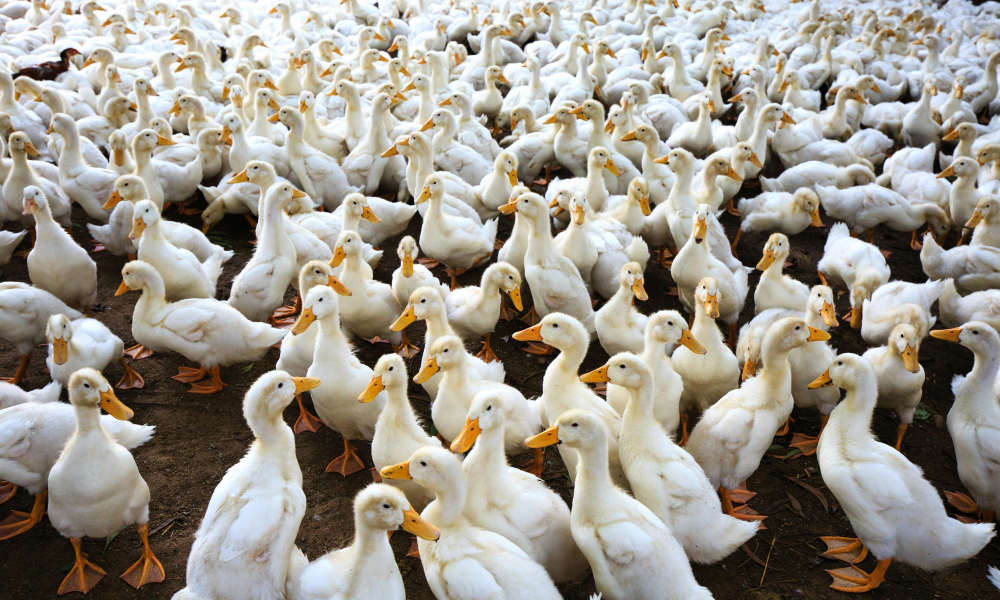
An outbreak of highly pathogenic H5N9 bird flu has been detected for the first time in U.S. poultry at a farm in California, according to health officials. H5N1 was also found on the same farm, indicating a possible reassortment of the virus.
The outbreak was confirmed on Monday at a commercial duck facility in Merced County, California, according to the World Organisation for Animal Health (WAHIS). The initial report of the outbreak came in late November 2024.
This is the first confirmed case of H5N9 in poultry in the United States, WAHIS stated. H5N1 was also found in the same farm, requiring nearly 120,000 birds at the facility to be culled. The clade 2.3.4.4b was identified in both viruses.
The presence of clade 2.3.4.4b in H5N9 and H5N1 indicates these viruses could be undergoing genetic reassortment in shared host species. Genetic reassortment occurs when different influenza viruses co-infect the same host, exchanging gene segments and producing new viral combinations. According to health experts, this process increases the risk of creating a virus with enhanced pathogenicity or zoonotic potential.
“Although this indicates reassortment with avian viruses, it’s still bad,” said virologist Dr. Angela Rasmussen in a post on X. “While it’s unclear how much risk reassortant avian viruses pose to the human population, they can reassort with human viruses as well. Especially in other hosts that also don’t get very sick & are susceptible to human viruses. Like pigs.”
Since the discovery of H5N1 clade 2.3.4.4b in the Netherlands in 2020, the virus has spread in an unprecedented global outbreak, causing mass infections and mortality events in birds and mammals. It has reached regions previously untouched by H5N1 outbreaks, including South America and Antarctica.
LINK: A list of all human cases of H5N1 bird flu since 2021
Although hundreds of H5N1 cases in humans have been confirmed in spillover events since 1997, when it first jumped to humans in Hong Kong, the new clade has caused the highest number of human cases since an outbreak in Egypt in 2014–2015 from an older endemic clade, according to data from the Centers for Disease Control and Prevention (CDC).
The new clade has also caused infections in humans in several countries with no prior history of reported cases, including Canada, Chile, Ecuador, the U.K., Spain, and predominantly the U.S.
Since 2022, the U.S. has accounted for dozens of cases, most linked to infected livestock. The U.S. recently reported its first H5N1 death in a person who had contact with backyard poultry in Louisiana.


Statistics On The Most Common Personal Injury Causes Reveal A Clear Outlier

7 Questions to Ask a Personal Injury Law Firm Before Hiring

4-year-old finds unsecured gun, fatally shoots 2-year-old boy in Florida

New York man arrested after livestreaming threats to kill Donald Trump Jr.
-

 Legal1 week ago
6 shot, 1 killed, at San Antonio apartment complex
-

 Legal3 days ago
Man shot and killed by police after pointing gun at people in Austin, Texas
-

 World2 days ago
Death toll from wildfire in southern Spain rises to 13
-

 Politics1 week ago
U.S. condemns China’s submarine ICBM test into Pacific
-

 World7 days ago
Ukrainian suspect in Monaco bombing found shot dead
-

 Legal1 week ago
Police sergeant, mother and daughter killed in Ohio shooting; suspect dead
-

 Legal6 days ago
San Diego deputy sentenced for shove that fractured detainee’s spine
-

 Legal6 days ago
Illinois man charged with threatening to attack Fort Bliss personnel and families